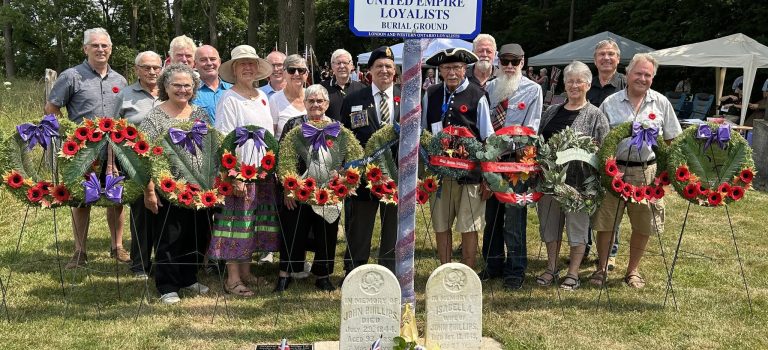
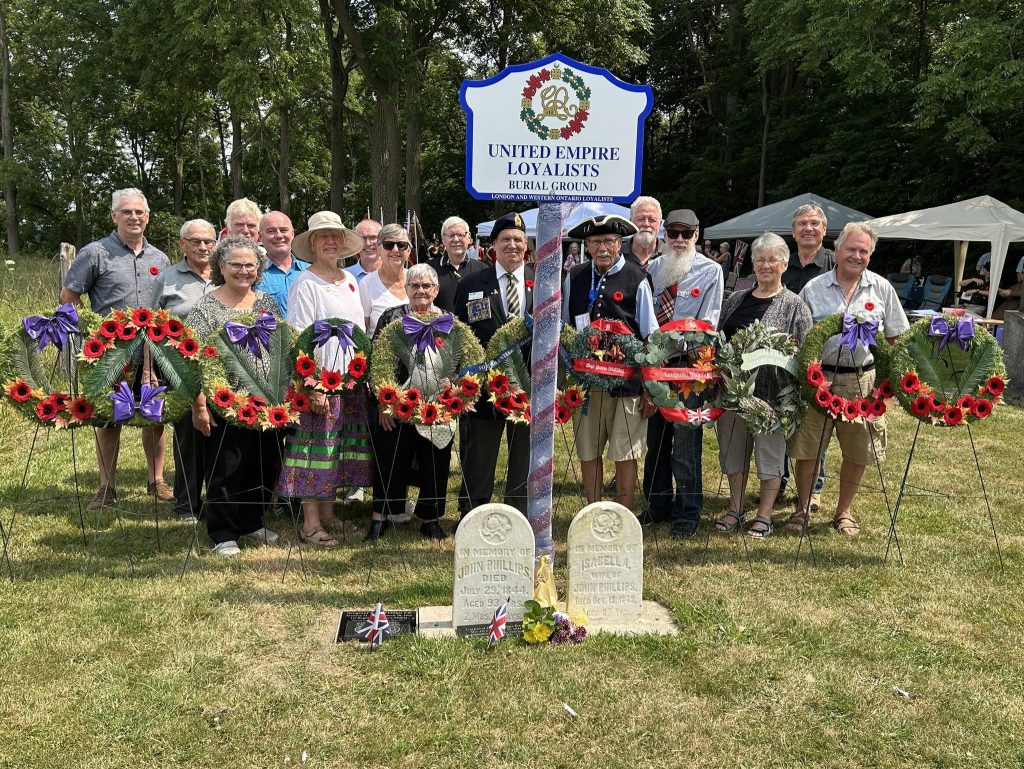
By Jennifer Grainger – On July 26, I attended the Willey Cemetery memorial service. This quiet graveyard at 5267 Gentleman Drive, just off Thames Road in the former Ekfrid Township, was busier that day than it had been in years, as it was officially dedicated as a United Empire Loyalist (UEL) Burial Ground. A War of 1812 veteran buried here was honoured at the same time. The event, sponsored by UELAC Western Ontario Branch and Glencoe & District Historical Society, reminds “Old Stock” Canadians who we are and why we’re here.
The Glencoe & District Historical Society mourns the loss of Ken Willis, our friend, longtime historian and museum keeper for Wardsville, Newbury, and the Township of Mosa.
For decades, Ken devoted himself to preserving the stories of his community. As Historian and Manager of the Wardsville Historical Museum, he gathered, catalogued, and cared for an extraordinary collection of photographs, documents, and artifacts housed in a historic building on Longwoods Road in Wardsville. Every item in that collection reflected Ken’s deep commitment to making sure the people and places of Wardsville would not be forgotten.
Ken was also an author, having written A History of Wardsville, Volumes 1 and 2 — works that stand as a lasting record of his research and his love for the village’s story.
Last year, Ken made a decision that speaks to his lifelong dedication: he arranged for the entire contents of the Wardsville Historical Museum to be transferred into the custodianship of the Glencoe & District Historical Society, ensuring that the collection he had spent a lifetime building would be preserved for future generations. True to form, Ken’s concern was not only for the artifacts themselves, but for the people of Wardsville — he wanted to be sure that the residents of the village he loved would continue to be looked after, and that their history would remain accessible to them.
The Society is honoured to now serve as steward of Ken’s collection, and we take seriously the responsibility he entrusted to us. His photographs, documents, and personal papers — many with carefully documented provenance — will help tell the story of Wardsville for years to come.
Ken Willis will be remembered as a dedicated historian, a careful keeper of memory, and a generous friend to everyone who shared his passion for local history. Our thoughts are with his family and all who knew him.
I am at a bit of a disadvantage writing about a man I never met. Those who remember him will each have their personal remembrances, that I know nothing about, but wish I did.
I have a hard time using the term “Grandfather” to describe this man. The name “Bill” comes easier and I will use it as I relate information about him. To a lot of people, Bill Edwards was “Stubbles from the Farm” in the person of “Claud Hopper” the central character in this farm based series.
Presented by Steve Robson |Model created by Steve Robson
Overview
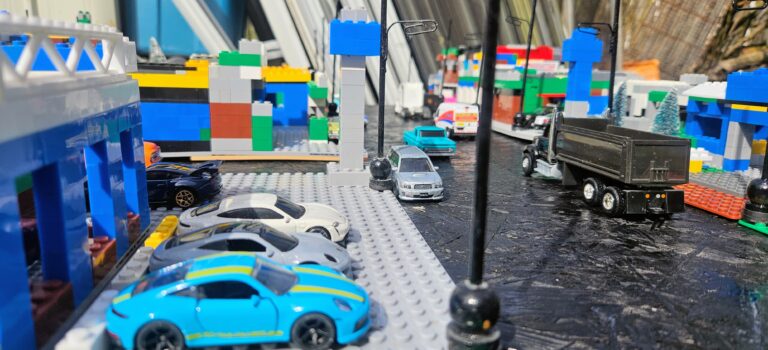
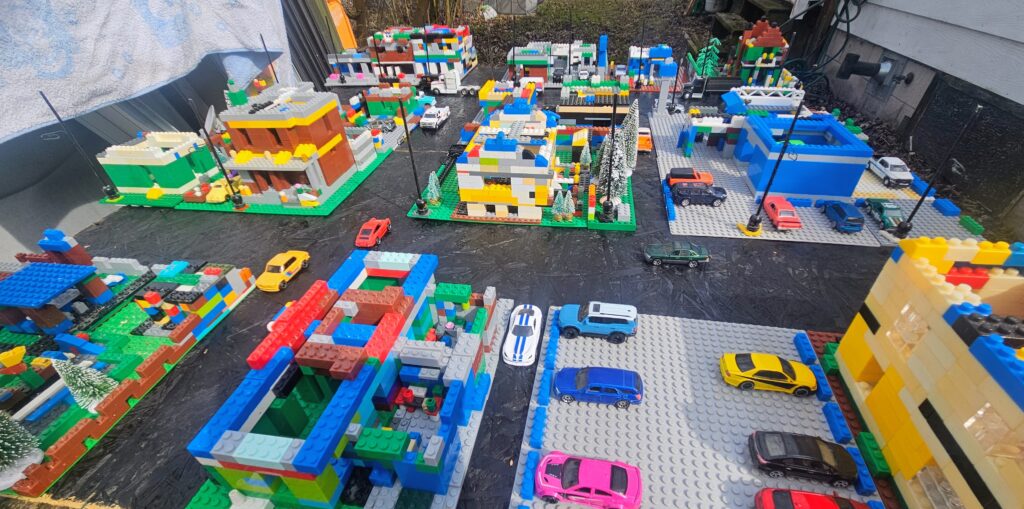
The Lego Village Project involves creating a mobile, movie-like set for photographing 1/64 scale model cars. The base of the project draws on various building designs from different towns and cities to create a fictional town. The end result is a compressed town showcasing a place with many elements of a working, living village.
How It Started
The project began with a single building structure, built simply to see how a Lego building would scale in appearance next to Hot Wheels and Matchbox cars. The test worked out well. At that point, there was no real plan to create a full village. Over time, plans developed into a complete village layout, involving a number of drawings covering both the overall plan and individual building designs. The end result is a very functional-looking village.
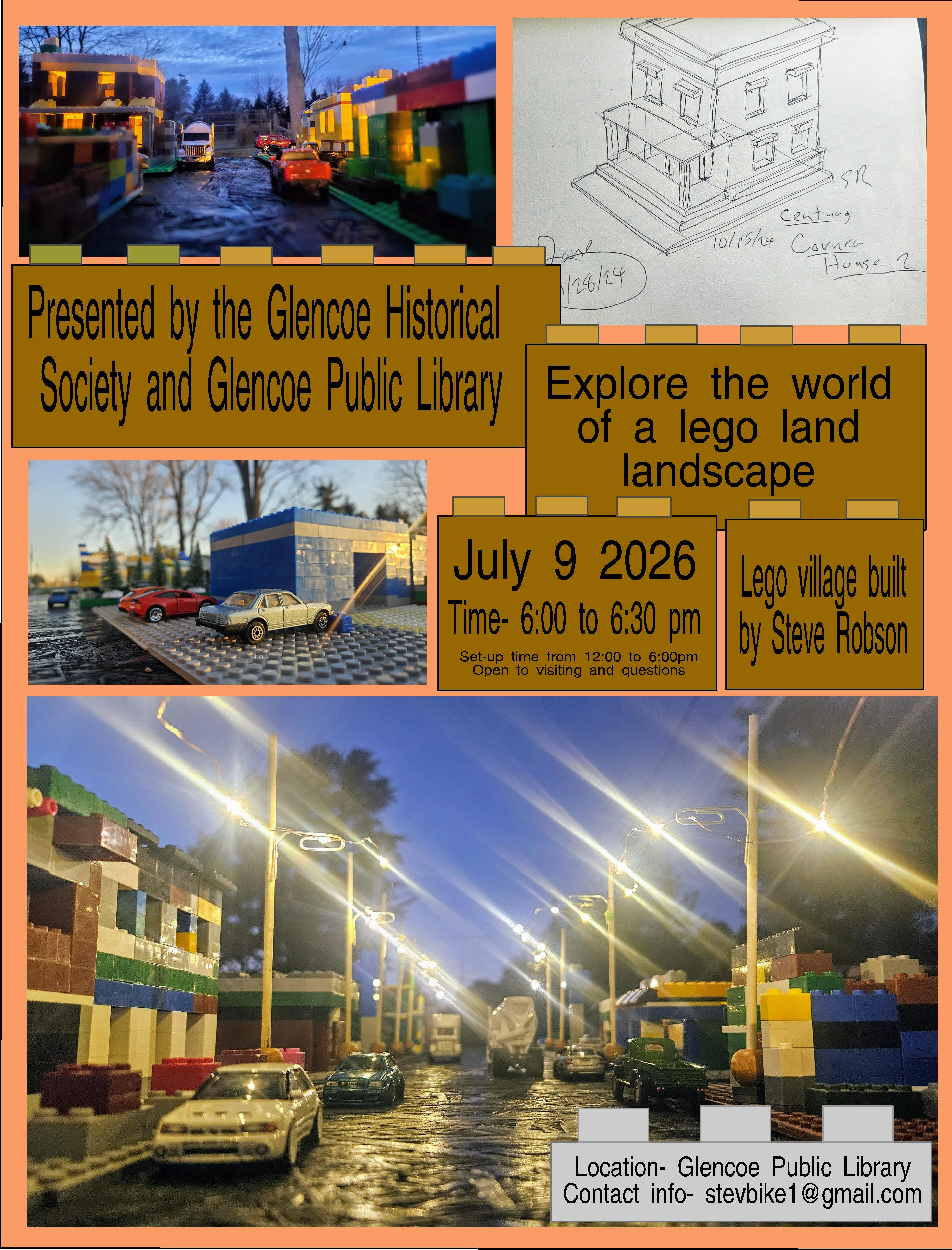
July 9th LEGO event by Steve Robson at the Glencoe Library
Setting Up the Village
Setting up the village involved several key decisions.
The first major consideration was compressing the scale of both the buildings and the space between property lines. Building scale was determined by the size of the plates the Lego design team produces. A 5″ × 5″ plate in 1/64 scale measures out to 26.5 feet. A 10″ × 10″ plate measures out to 53 feet. This is based on the 1/64 scale standard of 1″ equalling 5.3 feet.
The smaller blocks used to create walls carry a rough cost factor of about $7.00 per square foot — approximately 10 cents per block — averaging out to 70 blocks per square foot. This is based on a standard 4-stud brick.
Building height is determined by the style of the structure and its interior ceiling height. Using the 1″ = 5.3′ ratio, divide the height of a real-world measurement (for example, an 8-foot ceiling) to find the correct exterior wall height. Doors, windows, and other details follow the same method and can be made to look properly proportioned at this scale.
Some building designs are reduced further in size to allow for a tighter layout. If every building were built to fully correct scale, the village would contain only a fraction of the elements included in the current layout.
The Compressed Design
The compressed design approach allows for a modular layout that can be set up in any configuration. One of the primary reasons for this building style is to use the structures as photographic props. The slight downscaling can be minimized with this purpose in mind — a wide-angle lens creates the appearance of a larger environment than actually exists, while the remaining space still provides a believable sense of a living space.
These designs can be built at various levels of detail. Fully detailed structures work well for complete display setups, while simpler versions — recreating just home and storefront facades — make excellent display backgrounds for a die-cast car collection on a shelf, reflecting the era of the vehicle being showcased.
Exploring the History of Small Towns
Through LEGO Scale Modelling
Presented by: Steve Robson and Paul Macdonald
Thursday, July 9, 2026
Glencoe Library
Colour
An important element is the use of colour in the design. A colour-coding system developed naturally during the build. Browns and greens were used in older building designs, while brighter colours go into newer structures. Combinations of these colours bridge the gap in between. Some business-themed models use colour patterns to create a corporate-looking feel.
A challenge can arise when materials run short during a build. If a strong colour theme is needed, purchase enough bricks to complete the design before starting. That said, budget is always a factor. Creative use of colour can fill out a design in interesting ways, adding a unique visual character that reflects your own vision for the scene.
Engineering the Structures
Engineering Lego structures is different from real-world construction. In effect, you are building with oversized blocks — similar in proportion to the concrete blocks used in parking lots and highway dividers. This affects the look of the finished model. Walls will be noticeably thicker, and small details will read as larger items at real-world scale. This is one of the things to accept when working with Lego as a building material.
For example, the top section of a house wall will be thicker than realistic in order to maintain structural strength. Roofs have been left off the buildings intentionally. This allows interior details to be seen and also provides a convenient pickup point when moving the buildings. The result is a slightly surreal, dream-like quality to the structures.
Keep in mind that although Lego is durable, it can break when dropped. These models should be handled like eggs — carefully.
Since these models need to travel, there is a balance to strike between detail and durability. There are limits to what can be achieved depending on the bricks being used, and some experimentation is required to find what works best for your build.
Reality vs. Illusion
One interesting question this project raises is: what is real, and what is fake?
Take a close-up photograph of the model village. The scene looks like a street, complete with cars and streetlights. At first glance, it reads as real. Only on closer inspection do the small details reveal the scale. At what point does the photo become “fake”? And yet, it isn’t truly fake — real physical objects are being used in a real scene.
This kind of setup is rooted in the practical special effects techniques of older films, and in some cases newer ones as well. It also opens a door to exploring the history of building design. An older version of a real town or city could be recreated to study its structure and character from a particular era — from a simple model to a complex and detailed layout.
Why Do This?
The last element worth considering is the reason to take on a project like this: it keeps the mind active.
Unlike AI, which is increasingly present in daily life, the process of sorting physical pieces, researching house designs, and studying architectural history creates a quiet space away from the world of technology. It can help in recreating memories of the past — either personal memories or general history from before your own time.
Building at a scale that must feel proportionally believable — using die-cast cars and trucks as reference — helps develop spatial thinking. Placing everything into a village setting helps in understanding how a working economy is structured: the business district versus the residential areas, the roadways, the flow of a community. The road of imagination is an important part of the planning process.
Hopefully, you end up with a design you are proud of.
— Steve Robson
About Steve Robson
Born in London, Ontario in 1961, Steve has spent a lifetime pursuing strong interests in photography and model building across multiple mediums. By combining these passions, he has found a unique way to recreate scenes full of personal memory and historical meaning — in three-dimensional, brick-built form. This project has transformed a long-held idea into reality, and Steve’s goal is simple: bring out the inner child in everyone as a great way to keep the mind active.
Organized by: Steve Robson & Paul Macdonald
Contact: Steve Robson, Creator | Courtney Joris, Glencoe Library
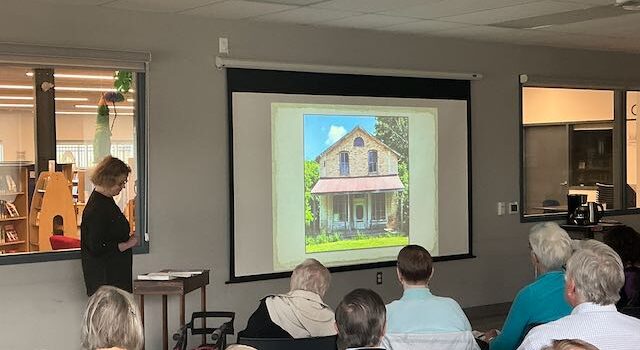
On June 18, 2026, the Glencoe Public Library was filled to capacity as 45 community members gathered to hear local historian Jennifer Grainger explore the rise and fall of Middlesex County’s vanished villages. The event was presented in partnership between the Glencoe & District Historical Society and the Glencoe Public Library.
Drawing on maps, photographs, land records, and archaeological clues, Grainger traced where these once-thriving communities were located, how historians and genealogists research them today, and what—if anything—remains visible on the landscape now.
The G&DHS thanks the Glencoe Public Library and Courtney Joris for their partnership in bringing this event to the community, and extends its appreciation to Jennifer Grainger for sharing her research. Here is the piece Jenny wrote for the Middlesex Banner featuring Cashmere, Napier, and Kilmartin.
Written by Harold Carruthers, No. 282 Lorne Lodge Mason historian, July 2024.
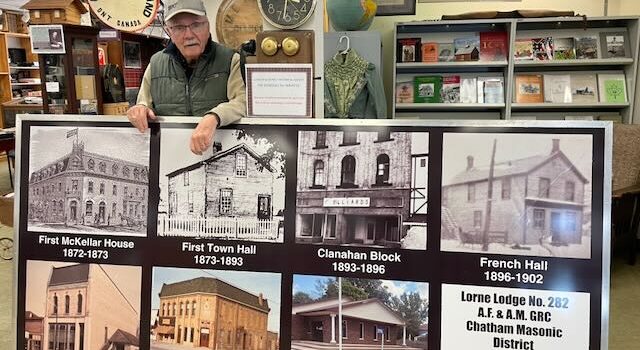
If one were to trace the history of any one Lodge, it might be compared with that of trying to determine the very origin of humanity. I am talking about the meeting places of the members of the organization called Free Masonry. The history of our local chapter, Lorne Lodge No. 282 Glencoe, can be traced back to 1872 and ended this year 2024 when our Lodge went dark after 152 years.
Last meeting of #282 Lorne Lodge: back row L-R: Keith Dickie, Alex McLean, Ron Livingston, Harold Carruthers, Doug Reycraft. Front L-R: Bob Munroe, John Mitchell, Ryan Brubacher, Bev Whitlock, Jim May, Terry Plant. Missing: Allan Mayhew, Brad Walker, Chris Yates.
Meetings were held in some of the most historical buildings in the village of Glencoe, Middlesex County.
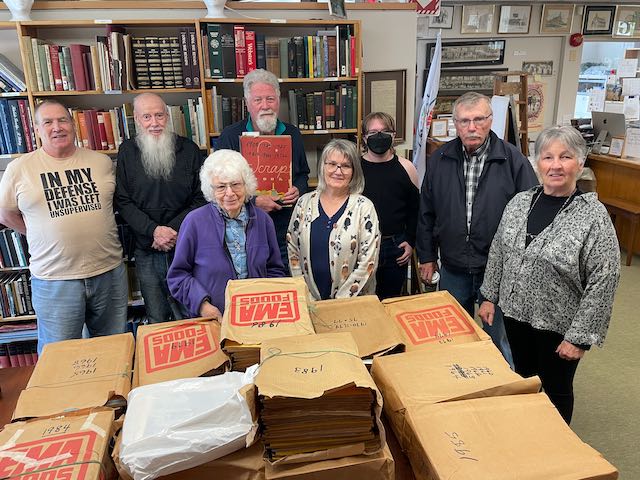
Glencoe Archives – Amy, great great granddaughter of Mrs. John “Alberta” McFarlane of R.R. #4, Appin, arrived Tuesday with her great grandmother, Caroline Gough, and grandmother, Betty Ann Gough, to deliver the Bertie Fonds. Here is Amy, a fourth year Western student headed into Library and Archive Science, descibing the significance of these scrapbooks.
This generous donation reminds us how essential it is to care for our family archives. These homegrown collections deserve professional preservation, cataloguing, and digitization so that families, genealogists, and historians alike can continue to piece together the stories that define who we are.
L-R Back – Gerry Cross, Norm McGll, Ken Beecroft, Amy, Harold Carruthers, Marilyn McCallum. L-R Front: Caroline Gough, Betty Ann Carr. Read more →
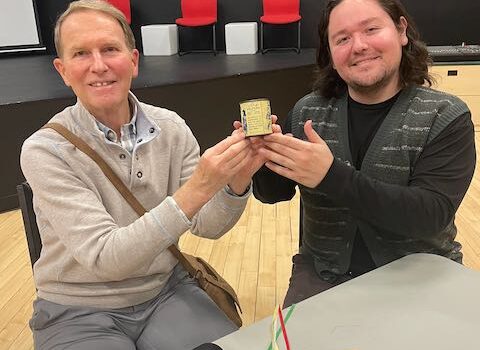
Brantford; On April 13, 2026, David Nelms and Mary Simpson travelled to Brantford, Ontario, to visit the Woodland Cultural Centre, located on the grounds of the former Mohawk Institute Residential School.
In their care was a small metal penny bank—simple in form, worn with age, and carrying with it the memory of a life.
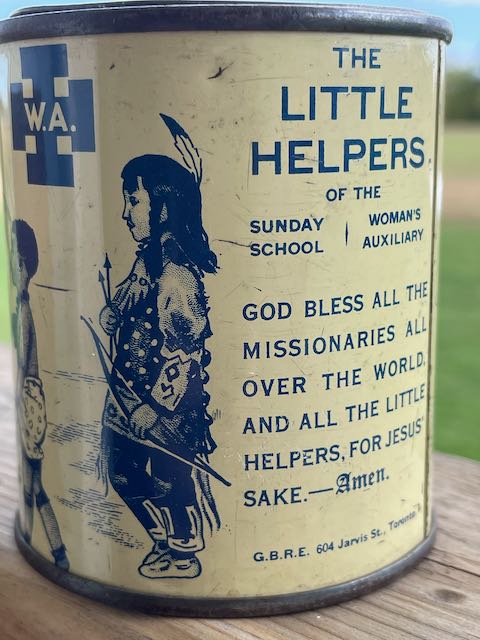
The bank belonged to Jemima “Ina” Simpson Nelms, who passed away in the summer of 2025 at just over 100 years old. As a child growing up in rural Southwestern Ontario, Ina attended St. John’s Anglican Church in Glencoe. She received the penny tin through her Sunday School program known as “The Little Helpers.” She would save her pennies and drop them into the slot, believing—as she had been taught—that the money would help “the little Indian children.”
Printed on the surface are images of children from around the world, as they were depicted at the time, along with a short prayer: “God bless all the missionaries all over the world, and all the little helpers, for Jesus’ sake. Amen.” Strangely, the handsome North American Indigenous boy is standing aloof from the group. Jesus has his back to him and the child is not part of the group – he’s just watching.
The Little Helpers of the Sunday School. Penny bank sponsored by the Woman’s Auxiliary of the Anglican Church of Canada. The Indian child stands apart from the group of children talking to Jesus. Read more →
When Ron McRae first began researching how to build a cedar strip canoe, it was during the COVID outbreak and at the urging of his son, Steven. Ron had recently retired and he and his wife, Linda had purchased two plastic kayaks. They enjoyed getting out on the water, but Ron found the seating position painful on his lower back. So he began researching canoes.
“I found Bear Mountain Boats in Peterborough,“ Ron recalls. “They sell cedar-strip canoe kits and have all these resources for amateur builders. I contacted them, hoping to register for a workshop with Ted Moores, the founder of the company and the man who wrote Canoecraft, the definitive how-to book for canoe builders. But his wife told me Ted was now in his seventies and had given up his in-person courses. She then said something that stuck with me: ‘Why don’t you buy the book, read it, and call me back if you still think you can do it?’”
So he did.
And he could.
And he did.
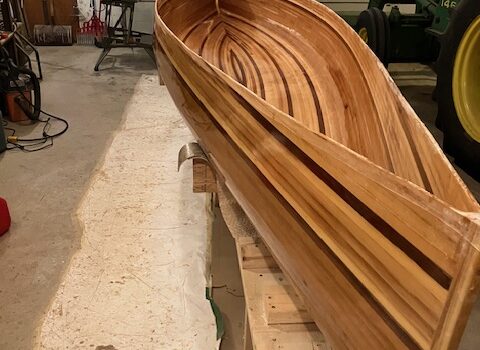
Ron ordered his first kit, which came with all the essential parts: carefully milled cedar strips in a range of colours from dark brown to nearly white, ash gunnels, deck pieces and seats and hardware. The key to a sound, straight tracking hull is the molds which shape it. Ron decided to purchase laser cut molds which were perfect, rather than risk cutting them by hand with a jigsaw. He chose a design that balanced form and function= something stable, not too long and suitable for beginners.
“I picked the Freedom 15 design,” he says. “It’s easy to paddle, good for two people or as a solo. I thought it would be a relatively easy build and perfect for novice paddlers like Linda and me.”
“I built that first canoe in about six months and really enjoyed the process. Linda and I have been exploring Southern Ontario paddling opportunities in it for the past three years and we seldom go out on the water without a comment on the beauty of our cedar strip canoe.”
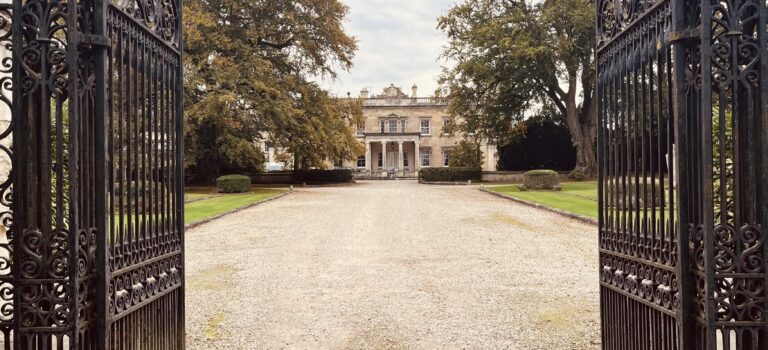
As our Uber approached the stately manor house at Grimston Park, a historic North Yorkshire estate about 25 minutes west of York, the size of the property immediately struck us. The sprawling 2,500-acre estate was a far cry from our quaint 200-acre family farm in Ekfrid Township near Melbourne, Ont.
But surprisingly, we felt right at home.
Along with my parents, Debbie and Alexander, we had travelled to this far-flung county to visit this rather impressive place because our ancestor James Alexander (1824-1895), my three-times great-grandfather, once lived, worked and worshipped here. (Though he likely arrived here via Scotland by horsedrawn coach, not electric car.)
Dec 6, 2025. The Archives, Glencoe – Donation and provenance provided by Kathleen Scott, great grand daughter, St. Thomas, Ontario. Received by Mary Simpson and Norm McGill.
This collection of items belonged to the McAlpine and Smith families of 3528 Oil Field Road, near Glencoe, Ontario. At the center of the family story is the marriage of Rebecca Smith and Alexander McAlpine, who were married on April 12, 1899. Their illustrated marriage certificate, preserved inside Alexander’s family Bible, is one of the key artifacts in this collection.
Rebecca and Alexander lived on the family farm on Oil Field Road. After Alexander’s death, the property was eventually purchased by Jim Schieman, and the McAlpine family maintained a warm friendship with the Schieman family for many years afterward. Several items in the collection reflect this long community connection.
Also included are photographs and records connected with the Zavitz, Schieman, and Peters families, who were neighbours and later stewards of the original McAlpine farm. A wedding photo of Peter Schieman’s son is part of this grouping.
Rebecca and Alexander lived on the family farm on Oil Field Road. After Alexander’s death, the property was eventually purchased by Jim Schieman, and the McAlpine family maintained a warm friendship with the Schieman family for many years afterward. Several items in the collection reflect this long community connection.
These artifacts—Bibles, hymnals, books, and photographs—together illuminate more than a century of rural family life in Southwest Middlesex, documenting marriages, migration, faith, work, and community connections passed down through generations. Thank you Heather for entrusting these treasures to the Glencoe & District Historical Society.
Tracing a Journey of Faith: Author Maria Moore shares the migration history of Old Colony Mennonites and her own family’s story during a presentation hosted by the Glencoe Historical Society.
The Old Colony Mennonite story stretches across continents and centuries—a journey shaped by faith, identity, and the ongoing search for a place where religious convictions can be lived without interference. This history, and its enduring impact, was the focus of a recent presentation by author Maria Moore at the Glencoe Presbyterian Church, hosted by the Glencoe & District Historical Society.
Contributions by Brian Huis and Gregory Childs. Edited by Mary Simpson.
On Sunday, July 27, 2025, the Simpson Cemetery in Southwest Middlesex came alive with memory, history, and community spirit. Over 50 descendants, neighbours, and friends gathered under the shade of the massive White Oak “heritage tree” for the annual cemetery memorial hosted by the Glencoe & District Historical Society (GDHS). This year a group of Simpson descendants, Micheline Champagne-Johnston, Wanda Simpson, Wendy Bestward, Jan Simpson, Dennis Simpson, Mary Simpson, and Brian Huis, joined in to give the event an interesting twist.
Cemeteries, particularly in rural Ontario, have long been places of both remembrance and reflection. Their park-like settings provide green space, cultural continuity, and a sense of belonging. This year’s memorial carried on the tradition of visiting and honouring one local cemetery each year.
Cemeteries are not only about the past; they are living classrooms and gathering spaces that remind us of who we are and the legacies we carry forward. – Brian Huis
Honouring Nicholas Bodine, War of 1812 Veteran
The central feature of the 2025 memorial was the recognition of Private Nicholas Bodine (1788–1885), a War of 1812 veteran buried in Simpson Cemetery. Bodine served in the 2nd Company, 1st Regiment of the Norfolk Militia and fought at the Battle of Lundy’s Lane on July 25, 1814—one of the war’s bloodiest encounters.
Nicholas’ service with the Norfolk Militia is perpetuated by the current Reserve Army Regiment, The 56th Field Artillery Regiment of the Royal Canadian Regiment of Artillery (56 FD), headquartered in Brantford. The Government of Canada awarded several War 1812-15 battle honours: ‘Detroit’, ‘Niagara’, ‘Queenston Heights’, ‘Defence of Canada 1812-15’, some of which, if not all were likely fought by Nicholas. The Norfolk Militia was also involved with the skirmish at the McCrae House near Chatham.
Born in Pennsylvania, Bodine came to Upper Canada in 1811, married Charlotte Sovereign, and farmed 50 acres in Mosa Township. His long life of 97 years was remembered in the Glencoe Transcript obituary of 1885, which praised his loyalty, faith, and wide respect in the community.
Glenn Stott and son, Brad Stott, stand attention to honour Nicholas Bodine, September 27, 2025Read more →
The UTMRS— the Royal Scots —are more than skilled re-enactors; they are devoted stewards of local memory and dedicated community builders. Under the leadership of committed champions like Glenn Stott, they have brought the history of the Battle of the Longwoods to life for countless residents and visitors alike.
The Longwoods Memorial Service, held each March, is a vivid example of their impact. For decades, the story of the March 4th, 1814 skirmish was largely forgotten. In the 1980s, when my mother, Betty Simpson, noticed a solitary wreath placed at the federal monument near our family home, she discovered it was the Royal Scots who had revived this commemoration. Their dedication inspired local neighbours and organizations—including our Historical Society—to get involved and ensure the memory of those who fought and fell is never lost again.
The Royal Scots’ efforts extend beyond a single memorial service. They have taken on the ambitious Longwoods Heritage Weekend, an undertaking that draws families, students, and history enthusiasts from far and wide. Through authentic re-enactments, educational demonstrations, and engaging storytelling, they make our shared past accessible and meaningful for new generations.
Moreover, the UTMRS’s leadership and volunteer spirit have rippled outward. Champions like Glenn Stott were early supporters of the Canada Barn Quilt Trails project—encouraging community heritage work far beyond the battlefield. Their members give countless hours in costume and behind the scenes, sharing history with honesty, passion, and respect for the land and peoples connected to these stories.
Their work has even inspired film. The 2017 documentary by Barbara Urbach and Crocodile Productions is a testament to how the UTMRS bring history alive in both intimate, human ways and grand, dramatic moments on our historic landscapes.
In every sense, the Upper Thames Military Re-enactment Society are true keepers of our community memory. Their dedication ensures that stories like Lieutenant Patrick Graeme’s sacrifice—and the broader heritage of the War of 1812 in our region—continue to inspire reflection and understanding.
For these reasons, the Glencoe & District Historical Society wholeheartedly endorses the Upper Thames Military Re-enactment Society for the Governor General’s History Award. They richly deserve this recognition for their outstanding contribution to community history and heritage education.
There is so much more we could add. Please do not hesitate to reach out to us to learn more about their wonderful community work. It’s so much fun to work with them – they never say ‘no’ when we ask for a re-enactor to attend an event – no matter how small or modest the event is.
George Ward – the founder of Wardsville and for whom the town is named – had an impressively interesting life that took him from his native Ireland and, as part of his military service, to many parts of the burgeoning British Empire. He ended up in Southwest Ontario, retired from the army and established an inn at Paint Creek (now Wardsville). He survived – just- the American invasion of 1813, and suffered, in addition to the loss of his property, the accusation of treachery due to his confused involvement in the Battle of Longwoods. Nevertheless he lived to the ripe old age of 87, and established a family that cherishes their ancestor to this day.
The connection to St John’s Anglican is through the oak altar table and reredos, seen here in the chancel under the stained glass window, and which memorialises George Ward and his immediate family:
Zooming in the altar table reveals the memorial plaque:
Windows on the past Part 3 St James Anglican Church, Wardsville by Bill Simpson
St James Wardsville was torn down in 1942 after the foundations were fatally undermined by improvements to the adjoining Hagerty Road. Sadly, there are no known pictures of the interior of the church, and we have only an image of the exterior to let us know how it looked.
The design looks very similar to that of St John’s Glencoe, with the exception that the belltower is offset to the side of the entrance rather than where the entrance porch is shown. This explains how the reredos (wooden screen in the chancel) fit so snugly into the chancel at St John’s when it was moved there. (I am writing another post about this memorial reredos and altar table.)
It was noted in an Anglican News article that St James had many beautiful ornamental and memorial windows, but we have no pictures of them.
But, remarkably, a small part of one of these windows was discovered by Wilson Bowles while renovating his house on Talbot Street and was given over in to the care of Ken Willis, the Wardsville Historian. Ken speculates that this fragment was rescued by Abraham Linden, who occupied the house previously.
It was in the year 1839 that John Strachan became the first Bishop of Toronto. When he received this appointment, his diocese covered the land area now known as Southern Ontario.
The Rev John Gunne was licensed ‘To perform the office of Travelling Missionary’ by the Bishop, for the Townships of Zone, Euphemia, Brooke, Ekfrid and Mosa on June 30, 1845. On one Sunday of each month he would ride his horse from Zone Mills (Florence) which was his headquarters, to hold services in Wardsville, likely in private homes until a church building was erected.
The first official parish to be formed was Wardsville, Glencoe and Newbury, also in 1845. About the same time, land was given to the Church of England, for the purposes of a church building, by Dr. Abraham Francis. (This land, 102 acres, was on the south Part of Lot 20, Range one North of the Longwoods Road.) A parsonage was subsequently built on this property but the year is not known.
Lots 18 and 19, south of Church Street, were obtained by the Church Society of the Diocese of Toronto by a Bargain and Sale agreement with William Hatelie, et al, on August 22, 1849. This was a year or two after a wooden framed church building had already been constructed on the lot. This is known from a letter penned by Bishop Strachan on May 8, 1848, to Hatelie and the Churchwardens of the Church of Wardsville. He wrote, gentlemen: I have the honour to acknowledge your Memorial of the 2nd instant, in which you state that you have erected a church at Wardsville, Township of Mosa at considerable expense, but that since the erection of said building, you have only had divine service in it every third Sunday. This building served a congregation of approx. 150 members until the very early 1870s when it fell into disrepair.
In part 1 of this series, I described the altar window in St John’s Anglican Church, Glencoe. There is another fine stained glass window in St John’s, which is found at the rear of the church to the left of the main door:
The image is titled “Christ Knocking on the door”.
“…The Light of the World is an allegorical painting by the English Pre-Raphaelite artist William Holman Hunt (1827–1910) representing the figure of Jesus preparing to knock on an overgrown and long-unopened door, illustrating Revelation 3:20: “Behold, I stand at the door and knock; if any man hear My voice, and open the door, I will come in to him, and will sup with him, and he with Me”….. The door in the painting has no handle, and can therefore be opened only from the inside, representing “the obstinately shut mind”.
This particular version does not show Christ holding a lamp but instead a staff.
The artist and the manufacturer are unknown to me. The style and colors of the picture suggest one of the major stained glass makers – Hobbs or McCausley.
The inscription reads:
In Memory of Thomas Strong who died 1st January 1927 aged 79 years.
He that liveth and believeth in me will never die.
Thomas Strong
From the census of 1891, Thomas Strong was a local farmer. He was married to Sarah Jane Strong. They had a son Frederick born 1881 but there is no local record for him after the 1901 census.
Thomas Strong had emigrated with Sarah from England. From below we can suppose that they both originate in the or near to Southwick, a small town in Sussex next to Brighton.
For Sarah Strong we have several peices of information from the Glencoe Transcript (thanks to Ken Willis for these):
Info from Glencoe Transcript – Wardsville News items. September 20, 1904 – Mr. and Mrs. Middlekrauff of San Francisco visited her sister Mrs. T. Strong.
September 21, 1906 – Mrs. T. Strong, who has been visiting relatives in Wiltshire England and niece Eva Frances, returned on the steamer “Empress of Britain” Sunday evening.
March 1, 1907 – Death of Sarah Jane Strong, age 57. Born in Southwick, England. Died at her home on Main Street, after a two day illness. Service at St James church by Rev. H.A. Thomas with burial in Wardsville cemetery. Cause of death : diabetes.
Info from Wardsville death records: 1 March 1907, Sarah Jane Strong, age 57 years, 3 months and 23 days, housewife. Residence – Longwoods road, Wardsville. (Main Street and Longwoods Road were one and the same). Cause of death was listed as diabetes.
Thomas became a noted benefactor of the church, loaning it $1000 to purchase the rectory building, and requiring only for interest to be paid, and the loan to be discharged at this death. In his will, he specified the stained glass window to be installed.
It is interesting therefore to speculate how his wife Sarah came to be buried in Wardsville after a funeral service at St James Church in Wardsville. There is also the disappearance of their son Frederick from all public records after 1901.
On April 5, 2025, Carrie Jeffery conducted a workshop on capturing oral histories. We had members of our community, visiting members of other heritage groups, and members of our own historical society in attendance. The engaging and interactive talk was followed by an informative presentation that showcased the various aspects of modern record-keeping that are now accessible for ancestral storytelling. Left to right: Donna Lynam, David Campbell, Carrie Jeffery, Susan McWilliam. Mary Simpson, the president of our historical society, also presented.
L-R: Donna Lynam, David Campbell, Carrie Jeffery, Susan McWilliam.
Imagine for a moment the mystery of your history.
By Carrie Jeffery. Published in the March 2025 issue of Middlesex Banner’s ‘Archive Alley’
Personal storytelling can be both fun and provide new perspectives on how we came to be. These stories can challenge our understanding of the past and give a voice to people who are often left out of traditional historical records: the everyday people that played a role not just in our own lives but also in the communities we live in that they helped shape.
With the help of today’s technology, we can translate an afternoon visit with our elders into a published collection of stories that honour their lives and their place in history.
They get to relive their younger days while we either transcribe them ourselves or even utilize voice memo software to transcribe them for us automatically!
In doing this now while this aging generation is still here, we are able to ask questions like “What year would that have been?” and “Why did you do things that way?” before it’s too late. We can learn about the passions and values they may have held that were similar to our own and what shaped their career or other interests. We can witness and capture the changes that have occurred in just one or two generations.
All over the world, churches are repositories of local history as well as places of worship, and Glencoe is no different. St John’s Anglican has its share of memorials and markers of personal and public history. This is the first of a series of posts about these. As a recent newcomer to Glencoe, I am likely to be unaware of facts and details about this church, window and Anna Moss which are otherwise common knowledge. Please let me know these so I can add them to this record. – Bill Simpson
There has been a St John’s Anglican Church at the corner of Main Street and Concession Drive since 1869. This building was replaced in 1893 with the current structure, depicted in the postcard shown below, with a current view beside it.