By Mary Simpson
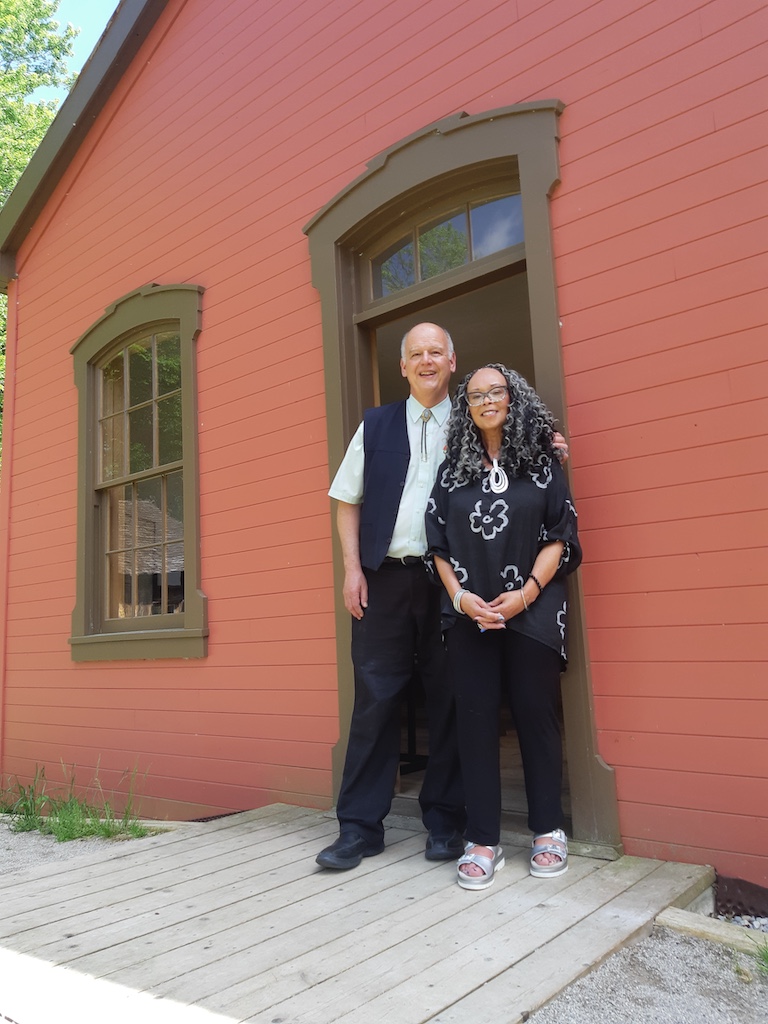
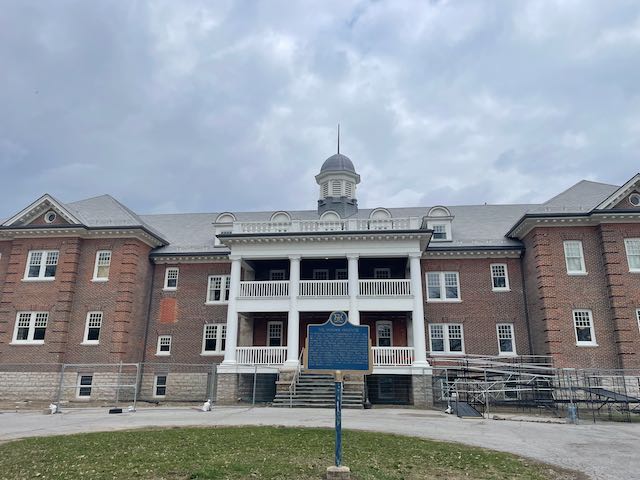
Brantford; On April 13, 2026, David Nelms and Mary Simpson travelled to Brantford, Ontario, to visit the Woodland Cultural Centre, located on the grounds of the former Mohawk Institute Residential School.
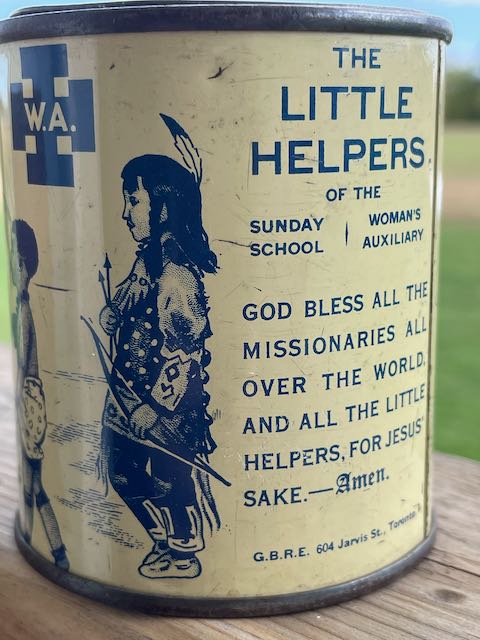
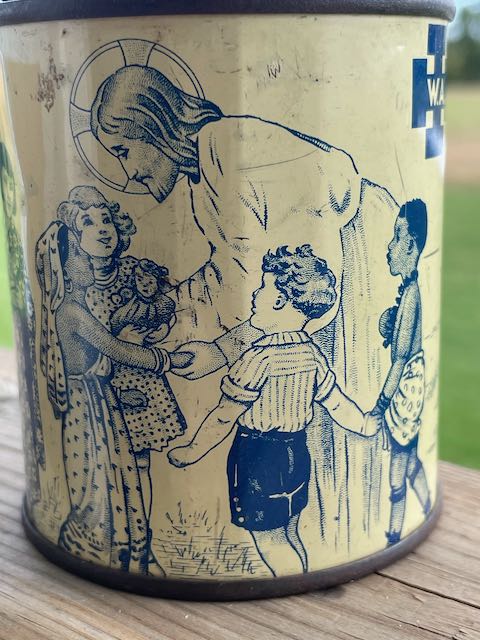
In their care was a small metal penny bank—simple in form, worn with age, and carrying with it the memory of a life.
The bank belonged to Jemima “Ina” Simpson Nelms, who passed away in the summer of 2025 at just over 100 years old. As a child growing up in rural Southwestern Ontario, Ina attended St. John’s Anglican Church in Glencoe. She received the penny tin through her Sunday School program known as “The Little Helpers.” She would save her pennies and drop them into the slot, believing—as she had been taught—that the money would help “the little Indian children.”
Printed on the surface are images of children from around the world, as they were depicted at the time, along with a short prayer: “God bless all the missionaries all over the world, and all the little helpers, for Jesus’ sake. Amen.” Strangely, the handsome North American Indigenous boy is standing aloof from the group. Jesus has his back to him and the child is not part of the group – he’s just watching.
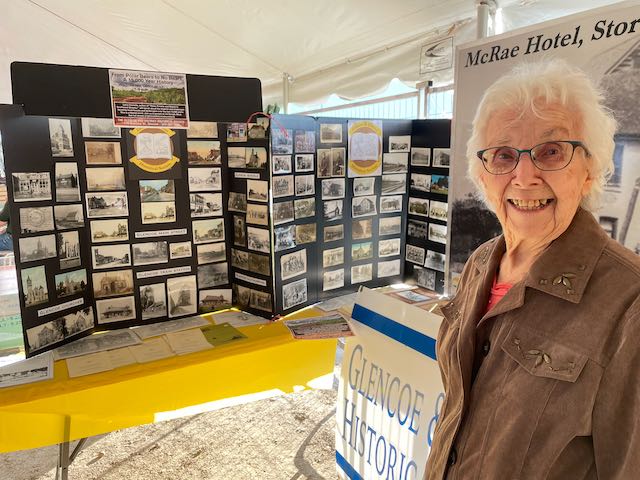
Ina did a lot of downsizing over the years. She was a long-time member of the Glencoe & District Historical Society and dutifully wrote on the back of every picture. And she meticulously passed the photos on to the people who were in them. But she never gave away the bank. It moved with her through the decades, quietly holding a memory of childhood—of faith, generosity, and purpose.
When David Nelms, Ina’s son, and her niece, Mary, arrived at the Woodland Cultural Centre, they presented the bank to Jake Jamieson of Six Nations of the Grand River, working in Arts, Culture, and Education. Jake told them that it will sit on the principal’s desk.
The idea to offer the bank to the Centre came through a conversation with Dr. Cody Groat, whose work connects communities with the history and legacy of residential schools. His suggestion opened the path for this object to find a home where it could be cared for and interpreted within its full historical context. Mary and David regret that Ina didn’t get a chance to present it herself or see the museum.
The Mohawk Institute: From Institution to Evidence
Established in 1828 by the New England Company as an industrial school, and operating as a residential school from 1834 onward, it became the longest-running institution of its kind in Canada. For generations, Indigenous children were taken from their families and brought here as part of a system that sought to undermine their cultures, languages, and identities.
The school operated through a partnership of church and state. Closely tied to Anglican missionary work, it later received federal funding beginning in 1885, with the Government of Canada assuming full responsibility in the final years before its closure in 1970.
Three main buildings stood on this site over time. An earlier school building was destroyed by fire in the 1850s (possibly through arson), and the second was destroyed in 1903 in fires set by students. The current building, constructed in 1904, still stands today and has now been carefully restored and interpreted.
For those who attended, the impacts of the school were profound and lasting, affecting not only individuals but families and communities across generations.
Saving the Evidence
After the school closed, the building fell into serious disrepair. By 2013, its future was uncertain.
At that point, leadership at the Woodland Cultural Centre turned to Survivors and community members for guidance. At one meeting, a Survivor offered a clear direction: “Save the evidence.”
That call became the foundation for what followed.
Through a Survivor-led effort and widespread support, more than $25 million was raised to preserve the building. Today, the restoration and interpretation of the Mohawk Institute is nearing completion.
The goal has not been to soften or erase the past, but to ensure it can be seen, understood, and remembered. Visitors now encounter the space as it was—guided by Survivors’ voices and lived experiences.
At the same time, the Woodland Cultural Centre continues its broader mission: to protect, promote, and share Hodinohsho:ni language, culture, art, and history.
A National Conversation
What began as a child’s act of giving—pennies saved with care and intention—has become part of a broader story about belief, responsibility, and understanding. This small penny bank continues its journey—inviting reflection, conversation, and a deeper commitment to learning from history.
In May 2026, the Woodland Cultural Centre will host a national gathering of Survivors, site stewards, researchers, and community leaders from across Canada. Together, they will explore a joint UNESCO World Heritage nomination for former residential school sites.
A UNESCO World Heritage designation recognizes places of outstanding cultural and historical significance and helps ensure their protection for future generations. This gathering represents an important step in bringing international recognition to these sites—not to celebrate them, but to acknowledge their history and ensure it is never forgotten.
Dr. Cody Groat, who has been involved in advancing this work at a national level, is also a key contact for the initiative. His earlier suggestion to Mary Simpson—that the Woodland Cultural Centre may be an appropriate home for Ina’s bank—helped connect this small family object to a much larger national and international conversation about memory, preservation, and responsibility.
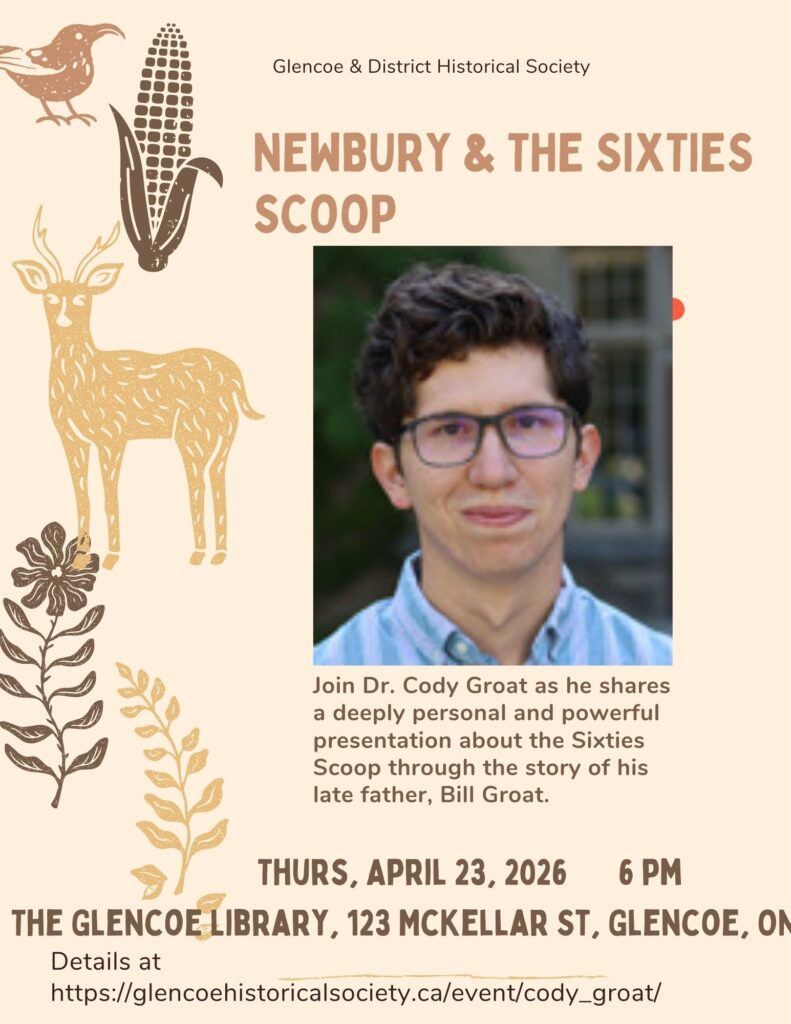
He is speaking in Glencoe April 23 and the title of this talk is Newbury and the Sixties Scoop
with Dr. Cody Groat
🗓️ April 23, 2026
🕔 Start time: 6:00 PM
📍 Location: The Glencoe Public library
Join Dr. Cody Groat as he shares a deeply personal and powerful presentation about the Sixties Scoop through the story of his late father, Bill Groat. A survivor of this dark chapter in Canadian history, Bill was a Kanyen’kehaka (Mohawk) child raised in a foster home in Newbury, Ontario, before returning to his biological parents—survivors of the Indian Residential School System—in London, Ontario. This 40-minute talk explores identity, displacement, and intergenerational trauma, woven with the long history of the Groat family and the local significance of Newbury.
Dr. Groat is an Assistant Professor in the Department of History and Indigenous Studies at Western University, and a citizen of the Kanyen’kehaka nation and Six Nations of the Grand River Reserve. In 2025, he received the King Charles III Coronation Medal for his work promoting Canadian heritage.