Known locally as the “Mush Hole,” the Mohawk Institute in Brantford, Ont. was Canada’s oldest and longest-running residential school. But on September 30, 2025, it officially became an interpretive historic site. On that solemn day, what was once a place of suffering, erasure and intergenerational trauma was reborn as a museum, teaching site—and a space for truth-telling, remembrance and hope.
The transformation was decades in the making, built on persistent activism, deep community engagement, archival research, restoration efforts and, above all, the resolve of survivors and Indigenous leadership that this history not be buried.
Behind the Bricks: A New Chapter
At the London Museum on September 25, Mary Simpson attended the launch of Behind the Bricks: The Life and Times of the Mohawk Institute. Edited by Richard W. “Rick” Hill Sr., Alison Norman, Thomas Peace and Jennifer Pettit, Behind the Bricks draws together Indigenous and settler historians, community voices, archival researchers, archaeologists and survivors to reconstruct the layered history behind the walls of the institute. Another launch event was held by the Ontario Historical Society a couple nights later.
The book begins by tracing the school’s founding and historical context, before delving into the its architecture and physical spaces, the curriculum and daily regimes imposed on children, religious and governmental oversight, student resistance, and the long process of commemoration and preservation. To close, Behind the Bricks allows survivor voices to speak directly, offering their unique perspectives of lived experience.
The editors have emphasized that the Mohawk Institute was not an isolated institution—it was in many ways a model or prototype for national residential school policy. The takeaway: What can this case teach us about the wider system of Indigenous schooling and control in Canada? How did notions of “civilization,” assimilation and authority operate in this place? How do we reckon with the spaces—the bricks, corridors and dormitories—that bore witness to so much pain? Behind the Bricks does not offer easy answers, but rather invites readers into the difficult task of listening, digging and reflecting.

Rick Hill: Historian, Advocate and Keeper of Memory
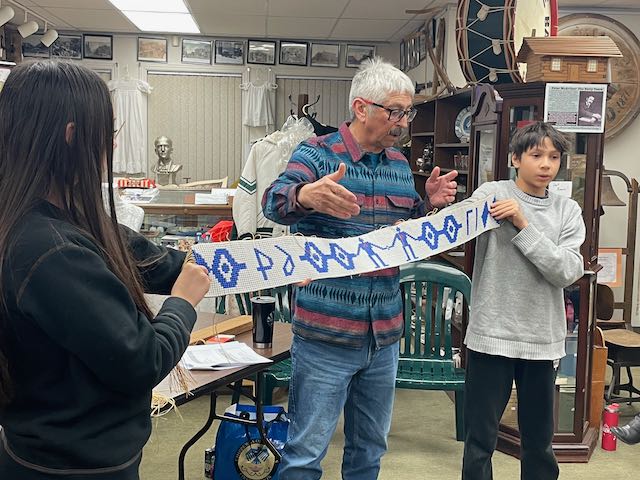
One of the central figures in this resurgence of memory is Rick Hill. A Tuscarora of the Beaver Clan at Six Nations, Hill has long been a community historian, curator, activist and cultural worker. His work bridges the academic and community worlds. From excavations beneath the institute to public exhibits at the Woodland Cultural Centre, Hill has insisted that Indigenous agency, voice and presence be central to narrating this history.
Hill’s approach has often been described as “public history from within”—not as a distant observer, but as one accountable to his people, the survivors and future generations. The Behind the Bricks project is a culmination of decades of work to ensure that the truths are neither lost nor glossed over. The conception of the book—that Indigenous and non-Indigenous scholars co-create rather than impose a narrative—is a reflection of Hill’s own respectful collaboration and knowledge-sharing.
A Day of Remembrance and Transformation
The launch on Truth and Reconciliation Day , Sept 30, 2025, was designed as a collective moment of reckoning, witness and transformation. Organizers, led by the Woodland Cultural Centre (WCC) and Indigenous partners, planned a day of speeches, tours, film screenings, survivor Q&A sessions, art activity spaces and community gatherings.
From morning to evening, visitors from Brant County and beyond moved through the former school’s hallways, dormitories, classrooms, laundry room and dining hall. Along the way, interpretive panels, audio recordings, archival photos and quotes confronted visitors with the lived realities behind these spaces. Survivors shared testimony—some deeply personal, others somber and resolute.
One powerful moment came from Geronimo Henry, who had spent 11 years at the Mohawk Institute beginning in 1942. He spoke of longing and absence: waiting at a window for his mother, never seeing her again for years. His voice, steady and piercing, bore witness not only to his own story, but to the experiences of many children whose lives were disrupted, stolen and shaped by that institution.
Also speaking was Roberta Hill, who attended the institute from ages six to 10. She recalled frequently gazing out windows, feeling a deep desire to go home, but being told by supervisors that she would never return. Her reflections underscore how homesickness, fear and separation became daily companions for children housed at the school.
Sherri-Lynn Hill, Chief of Six Nations, emphasized what was once a site of trauma would now become a “safe space for survivors to tell their truth, and for all people to learn.” She called the reopening a new era: one where memory, accountability, education and hope all converge.
Why This Matters Here
Why should a small historical society in Glencoe turn attention to the launch of a museum in Brantford?
- We had our own residential school: Mt. Elgin. It’s gone.
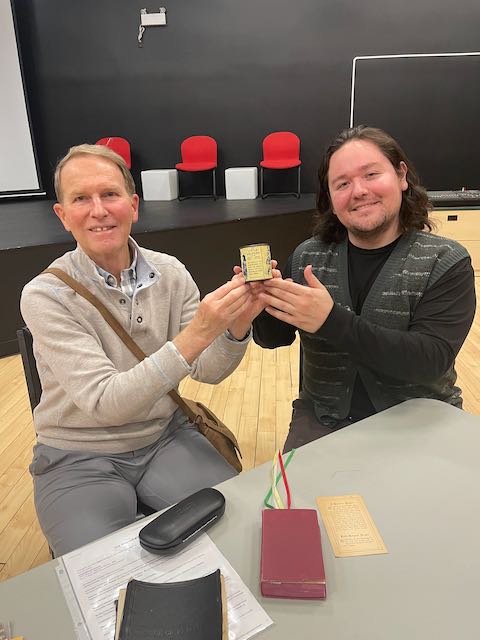
One of our members, Ina SIMPSON Nelms, recently deceased, remembers saving her pennies and putting them into a special Anglican Church-sponsored tin can. This was a Sunday school assignment to give money to help the Indian children. It would be interesting to know where exactly that money went. - Lessons in preservation and commemoration.
The restoration of the Mohawk Institute involved years of funding, architectural stabilization, archival work, archaeological excavations, community consultations and trauma-informed design. For those interested in heritage and museum work in rural or small towns, it is a model of how to balance physical preservation with sensitive public engagement. - The power of collaboration in historical work.
The Behind the Bricks project brings together community historians like Rick Hill, Indigenous voices, academic scholarship and archival institutions. It’s a reminder that collaborative, respectful history-making—especially around difficult topics—yields richer and more accountable outcomes. - A call to local action.
As a historical society, Glencoe & District has the opportunity to engage our community in listening events, book discussions, school programs and/or exhibits related to this legacy.
Compiled by Mary Simpson, President, Glencoe & District Historical Society.