Our Local Mastodons

Our Local Mastodons

The Mayfair Mastodon

Glencoe Transcript, October 30, 1890: The bones of another Mastodon have been found on the farm of T. Jones, at. While plowing on Wednesday, the head, upper jaw, three teeth and one rib of a mastodon were ounearthed. The rib is 4 ft in length and the teeth are 3 in wide and 6 in long.. The parties are still digging, and additional discoveries are expected. 


A Bit of History about the Mosa Mastodon

… by Glennda (WATSON) Dupuis, 2024

Mr. and Mrs. Andrew Watson, along with their two sons, Edward and James, came from Ompah, Ontario (in Frontenac County in eastern Ontario) in 1919. Andrew purchased a farm on the C.P.R. Road in Mosa Township (northerly half of Lot #8, Third Concession, Mosa Township) from Mr. George Innes.

Andrew and Elizabeth resided on this farm until Andrew’s death in 1947. James purchased the farm from his mother and resided there with his wife, Dora, until 1956, when they sold and moved into the town of Glencoe. Their children were Clara, Morley, and Glenn. I am Glenn’s daughter and James’ granddaughter.

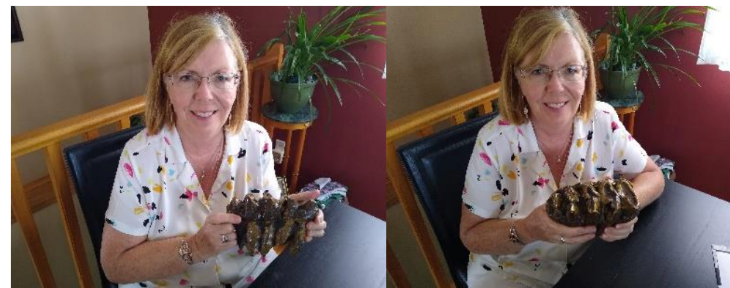
In 1939, while plowing a drained bog on his farm, James unearthed two giant teeth which were later confirmed to be those of a mastodon. Each tooth weighed approximately 4.5 lbs (just over 2 kg) and measured approximately 7.5 inches by 4 inches.

Other bones were found on the site and were described by James as being “as far round as a football.” These were believed to be leg bones. Unfortunately, not being well versed in the preservation of fossils and not truly understanding what he had discovered, the process used to unearth these other bones resulted in them falling into pieces.

Read more

Journey of the Highgate Mastodon

Journey of the Highgate Mastodon

Written by Merry Helm. Reposted from the Dakota Datebook Archive. July 23, 2004. Details of the Highgate Mastodon museum tour Feb 18, 2026.

In the spring of 1890, William Regcraft found some bones while digging a ditch on his uncle’s farm, one mile from Highgate, Ontario. A hardware merchant named William Hillhouse bought the bones, and he and his uncle, John Jelly, also bought the right to continue excavating. What they found was almost an entire skeleton of an Ice-Age mastodon, relative of the modern elephant.

Read more
Behind the Bricks, Truth & Reconciliation and the Rebirth of the Mohawk Institute Museum

Behind the Bricks, Truth & Reconciliation and the Rebirth of the Mohawk Institute Museum

Known locally as the “Mush Hole,” the Mohawk Institute in Brantford, Ont. was Canada’s oldest and longest-running residential school. But on September 30, 2025, it officially became an interpretive historic site. On that solemn day, what was once a place of suffering, erasure and intergenerational trauma was reborn as a museum, teaching site—and a space for truth-telling, remembrance and hope.

The transformation was decades in the making, built on persistent activism, deep community engagement, archival research, restoration efforts and, above all, the resolve of survivors and Indigenous leadership that this history not be buried.


Behind the Bricks: A New Chapter

At the London Museum on September 25, Mary Simpson attended the launch of Behind the Bricks: The Life and Times of the Mohawk Institute. Edited by Richard W. “Rick” Hill Sr., Alison Norman, Thomas Peace and Jennifer Pettit, Behind the Bricks draws together Indigenous and settler historians, community voices, archival researchers, archaeologists and survivors to reconstruct the layered history behind the walls of the institute. Another launch event was held by the Ontario Historical Society a couple nights later.

The book begins by tracing the school’s founding and historical context, before delving into the its architecture and physical spaces, the curriculum and daily regimes imposed on children, religious and governmental oversight, student resistance, and the long process of commemoration and preservation. To close, Behind the Bricks allows survivor voices to speak directly, offering their unique perspectives of lived experience.

The editors have emphasized that the Mohawk Institute was not an isolated institution—it was in many ways a model or prototype for national residential school policy. The takeaway: What can this case teach us about the wider system of Indigenous schooling and control in Canada? How did notions of “civilization,” assimilation and authority operate in this place? How do we reckon with the spaces—the bricks, corridors and dormitories—that bore witness to so much pain? Behind the Bricks does not offer easy answers, but rather invites readers into the difficult task of listening, digging and reflecting.