Marie Williams: A large crowd packed into the Glencoe and District Historical Society Archives on Wednesday evening, March 12, 2025. Following announcements, a brief membership report and some unfortunate technical difficulties, Society president Mary Simpson introduced the evening’s guest speaker, Glencoe native and author Daniel Perry.
Perry spoke about his newest work, a non-fiction memoir focussed on his own research into the life of Thomas Gardiner and Gardiner’s connection to the hamlet of Cashmere in the former Township of Mosa.
Born in 1774 in Ireland, Singleton Gardiner sailed for New York State in 1804. He moved to the Talbot Settlement in 1816 and to Mosa Township in 1825. He built a mill in 1834 on the site of what became Cashmere.
His brother Thomas Gardiner, born in Ireland in 1767, sailed for New York in 1804 and arrived in Upper Canada in 1807. Perry outlined charges laid against Thomas Gardiner which were subsequently dismissed, the connections between Thomas Gardiner and John Parker Jr., tales from the War of 1812, his years serving as a teacher, disputes over land, family friction and his pleas for help as an aging man.
Singleton Gardiner was the first person buried at the Cashmere Cemetery in 1834 but there is no stone marking what could be the grave of Thomas Gardiner.
Near the house there is a sturdy oak tree that I always think of as one of the oldest of my friends. I grew up with it. Of course that is not exactly true, for I stopped growing many years ago, while it kept on growing, and it may keep on growing for centuries to come. But when I was a growing boy it was just the right kind of a tree for me to chum with. It was not too big to climb, and yet it was big enough to take me on its back and carry me into all the dreamlands of childhood.
For over two decades, Ken Willis has dedicated himself to preserving Wardsville’s history, curating a collection donated by residents that tells the story of Wardsville and its people. The Wardsville Museum is a cherished part of our community that houses a collection of artifacts and stories that showcase Wardsville and Mosa’s rich history. The museum depends on community support to preserve its treasures.
Ken Willis, the long-time curator of the Wardsville Museum, shares his personal story and an appeal for support.
Please denote your donation to benefit the Wardsville Museum and a tax receipt will be issued. Every dollar helps preserve Wardsville’s heritage for future generations.
Your support means the world to Ken and the entire Wardsville community. Thank you for helping us keep our history alive!
Ellwyne Ballantyne’s twenty-two years of brief, bright life are summed up on a simple plaque attached to a majestic buttonwood tree in Carruthers Corners. When local author CJ Frederick first saw the memorial tree in the rural area just outside of Glencoe, ON, she experienced a keen reverence. “It’s just a dot on a map. I was not prepared for how beautiful the tree was. It looked like it was wearing a cloak; as my mother says, ‘wrapped in a queen’s robe’. Knowing that this tree was dedicated to the life of someone who had given that life in a faraway, long-ago conflict really made me stop and think about remembrance and the enduring nature of love.” Ballantyne’s story had to be told; Frederick was eager to record it.
Great evening with James Carruthers, the story keeper; CJ Frederick, the story teller and author; and Patrick, the story champion. We packed the Archives and hosted a few people via zoom as well.
Stories ripple all around us, if only we’re willing to hear them. In 2012, CJ first learned of Ellwyne Ballantyne and the astonishing relationship he forged with two strangers after reading a short newspaper article about the dedication of an unusual tree to a long-dead soldier from World War One. With obligations to work and family filling her time, she wasn’t yet ready to hear his story. It took a global pandemic, with the prospect of lockdowns and unexpected forced time at home, to open her ears, mind, and heart and be ready to explore the roots of Ellwyne’s story that took place more than a century before.
Yoshio Shimuzu: “You have to remember that we had been driven from our homes by racial prejudice in British Columbia, reviled and despised by the bulk of the population, and here in the farmlands of southwestern Ontario, we were welcomed as equals and saviours by the farming population.” Read more →
By Mary Simpson and Denise Corneil. Featured in the Middlesex Banner.
The Barn Quilt Trail Movement, which started in Ohio, USA, has blossomed into a colorful journey across North America, thanks to the vision and dedication of individuals like Donna Sue Groves, now deceased. Inspired by her love for quilts and barns, Groves initiated the movement in 2001 when she painted the first quilt square on her family’s barn in Adams County, Ohio.
In Canada, the movement found roots in Temiskaming, Ontario, in 2007. Bev Maille, Marg Villneff, and Eleanor Katana spearheaded a project to paint 200 quilt squares, adorning barns and historic landmarks across the region in time for the International Plowing Match 2009. This initiative not only added vibrant colors to the landscape but also attracted tourists and boosted economic development.
Wardsville, Middlesex County, Ontario, joined the trail in 2009 when Denise Corneil’s mother, Eileen, returned from the U.S. with a barn quilt brochure. Denise, along with a team of volunteers, stitched a story quilt commemorating Wardsville’s founders, Mr. and Mrs. George Ward, for the village’s 2010 Bicentennial celebration. This project revitalized the community and became a testament to the power of preserving local heritage.
The movement continued to flourish in Ontario. With support from the Sand Plains Community Development Fund, over 100 quilts were created, each telling stories of settlement, community building, and rural life. Barn quilt trails spread up and down the roads of Middlesex, Elgin, Oxford, Norfolk, and Brant Counties in 2011.
Here in Middlesex, women living along Longwoods Road and the community of Chippewa of the Thames, worked side by side to plan two trails explaining how the War of 1812-1814 affected the lives of women, children, and families. The winter of 1813 was particularly bad.
Trail of Tears- Family. Located in the community of Chippewa of the Thames
The result was the Trail of Tears Barn Quilt Trail, a collection showcased on Chippewa of the Thames locations, and a trail stretching along Longwoods Road from Delaware to Thameville – plus two beautiful quilts and many new and enduring friendships. These trails and many more trails across Canada are curated at barnquilttrails.ca.
In 2013, all major barn quilt trails in Ontario were curated on one website, barnquilttrails.ca, supported by the Ontario Trillium Foundation. This initiative aimed to provide guidance and encouragement to communities starting their own barn quilt projects, ensuring the movement’s sustainability and growth. This website continues to be curated by volunteers and now showcases barn quilts across Canada.
As barn quilt trails spread across Canada, the United States, and around the world, they became more than just colorful displays; they became a way for communities to share their stories and preserve their heritage.
Today, as new projects like those in South Bruce and Osgoode Township emerge, the legacy of the Barn Quilt Trail Movement lives on. Denise Corneil, Wardsville, along with a dedicated team, remains committed to supporting and promoting these initiatives, ensuring that the colorful journey across North America continues to thrive for generations to come.
Some community barn quilt projects start the planning process with a theme and a story quilt. In 2009, Wardsville started up with the War of 1812 theme. Eleanor Blain and Sue Ellis, seasoned quilt makers, devised a plan to engage people of all skill levels in the quilt-making process.
With the assistance of local historian Ken Willis, who provided valuable insights into the Wards’ history, the quilt committee traced the Wards’ journey from establishing a settlement along Longwoods Road to enduring the trials of the Battle of the Longwoods and the ensuing accusations of treason. Thirty quilt blocks were meticulously selected to depict key moments in the Wards’ lives, ensuring that Mrs. Margaret Ward’s contributions were honored too.
The quilt-making process was a labor of love, with countless hours spent selecting fabrics, cutting shapes, and stitching together each block. Ellis and Blain invited community members, both experienced quilters and novices, to lend their hands to the project. The quilt frame at Beattie Haven Retirement Home became a hub of activity as individuals gathered to contribute stitches to the communal creation.
The quilt telling the story of George and Margaret Ward being stitched at Beattie Manor retirement home.
When the George Ward Commemorative Quilt was unveiled at Wardsville United Church in May 2010, it elicited gasps of awe from the crowd. The quilt’s was entered into the Group category at the 2010 International Plowing Match Quilting Competition in Shedden,where it claimed second prize.
Barn quilts are eight-foot square (and larger) painted replicas of actual fabric quilt blocks installed on barns. Barn quilts draw attention to Canada’s disappearing rural landscapes, timber frame barns, and the family farm. Each barn quilt tells a story and draws attention to unmarked historical places.
They can be scattered through the county mounted on beautiful barns (like Huron County), or they can create a themed route, leading visitors from one site to the next.
Tourists are Interested in our local history
With the aging baby boomer cohort, there is a lot of interest in nostalgia and history. There is a growing recognition that tourists are interested in our local history too.
The Canadian federal government is investing in rural and remote tourism. The tourism industry is realizing what barn quilt enthusiasts always knew. Statistics Canada shows that tourism provides billions of dollars in revenue and accounts for 10% of local jobs in rural (non-metro) areas. A federal spokesperson said that “Tourism can diversify and strengthen the economic base and viability as well as safeguard local culture, language and heritage. Businesses benefit from increased income from direct sales of homegrown and locally made products. Visitors want to participate in authentic Indigenous experiences, and 62% of Indigenous tourism businesses are in rural and remote areas.”
Louise Long applies masking tape prior to painting. Three coats. (Photo by Dave Chidley)
And so the barn quilt movement continues to spread. Go to barnquilttrails.ca to find the trails in Middlesex County and southwestern Ontario. Embark on a journey through time and space. This isn’t just tourism; it’s a love letter to the land, a celebration of heritage, and a testament to the power of community.
Presented to the Appin Memorial Day gathering August 1, 2000 by Jim May, whose family had a long association with Appin Cemetery. Jim’s first recollection of the cemetery was a phone call in the early 1950s: “Could my Dad come with his truck to help collect up stones for the cemetery gates?” This presentation tells the history of the Appin Cemetery, Appin, Ontario, Canada
By Bob Gentleman and Kathy Evans. Review printed with kind permission from the Middlesex Banner.
In July of this year, family and friends gathered at Arrowwood Farm, a beautiful property in Riverside, just south of Melbourne, to celebrate the publishing of a book written by my uncle, Bob Gentleman. The farm that is now called Arrowwood Farm (6460 Riverside Drive) has sentimental value to our family, as it was once owned by the Gentlemans, purchased in 1870.
Bob’s book, titled “They Settled in Riverside,” is largely a family history, documenting the arrival of our ancestors in the Riverside area and describing their family branches. But Bob also captures an era now decades past as he shares stories of early Riverside neighbours and of growing up in Melbourne in the 1930s. He recalls his paper route, the school, town merchants and businesses, the railroad, and the neighbours and friends who were important in his life.
As part of an annual commemoration of area cemeteries, Glencoe & District Historical Society (G&DHS) organized a presentation and community walk at the Appin Cemetery. Prayers, dedications, singing, and community conversation were key parts of the afternoon.
Lorne Munro – I became interested in historical events in the 1970s. My interest grew after attending the 25th Anniversary banquet of the Glencoe & District Historical Society at the Glencoe Legion in 2003. We presently have eight family genealogy books in our home that I manage and update. Ancestry.ca has been a great help and I correspond with family members to gather information.
During my tenure as President in 2018, the Society’s collection moved from our rooms on Main Street to the old library at 178 McKellar Street, Glencoe. I have served as secretary, first vice president, president (a couple of times). I’m slowing down now, just working on Wednesday afternoons in The Archives and enjoying any other projects that come along.
Peacefully at Strathroy Middlesex General Hospital , Strathroy on Monday, March 18, 2024 William “Lorne” Munro passed away in his 91st year. Predeceased by his wife Phyllis (2023). Dear father to Janice and Tom McCallum, Susan Sinclair and Steve Schneider and Cheryl and Roy Neves. Cherished Grandpa to Matt and Becky, Kimberly and Paul, Adam and Kirissa, Andrew and Reilly, John and Stacey, Scott and Mandy, Jacob, Emily and Brandon. Great-Grandpa to Isabelle, Josephine and Elliott. Lorne will be missed by many nieces and nephews. Predeceased by his parents Neil and Florence Munro, his sister Anna and his brother Keith. Link to Photos reel
The sense of community is one of the best aspects of living in a small town. Amongst these many things that gives Appin this feeling is the community gardens. Inspired by the World War II victory gardens used to help provide produce to towns and cities in Canada, the project started early in the spring of 2023.
This history was written by Lelah Bell Lumley in 1975 about her neighbourhood S.S. No. 3 School District, Mosa Township, Middlesex County, Province of Ontario, Canada.
The most southwest of Middlesex County’s townships, Mosa Township was initially part of a much larger parcel of land including parts of Kent and Lambton Counties. Surveyor Mahlon Burwell indicated that there was some confusion regarding the naming of the township, first designated as township D and then briefly as Aragon. Finally, the name Mosa, a derivative of the Spanish word Musa (muse). However the Lieutenant Governor Sir Peregrine Maitland decided to name the township Mosa, after the Maas river.
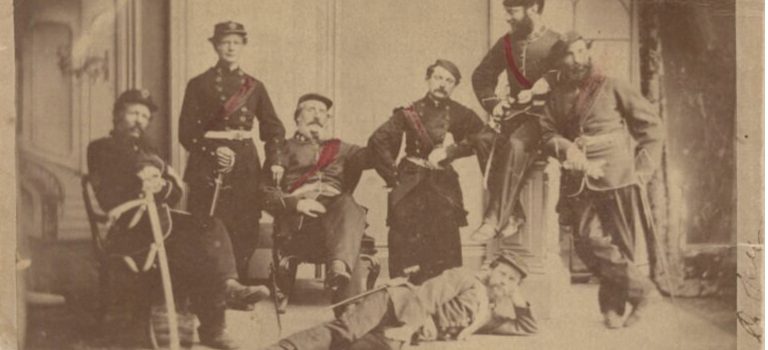
After Confederation 1867, the Province of Ontario (Canada West) was under British governance. Due to fears of what would happen after the American Civil War (1861-1865), the British authorities formed volunteer militia companies in hundreds of communities across Ontario, including our own.
The British authorities were concerned about a secret society of Irish patriots who had emigrated from Ireland to the United States with the intent of ending British rule by taking Canada by force and exchanging it with Britain for Irish independence. This secret revolutionary organization was founded on St. Patrick’s Day in 1857, by James Stephens in Dublin, Ireland. It was called the Fenian Brotherhood.
It is fascinating to imagine local kitchen table discussions about the Irish “terrorists” . Only our ancestors didn’t just talk about local politics at the coffee shop. They obeyed orders, formed militias and showed up.
On 3 Jan 1863, Wardsville volunteers formed independent militia company No. 6 within the 26th Middlesex Battalion headquartered in London. It was commanded by James T. Ward.
In early 1866, with tensions very high and Fenian attacks were anticipated along the St. Clair River. The Wardsville company was dispatched on March 8th to the Sarnia area and the local men “went under canvass” in full readiness to meet the enemy — in March .
But the Fenians didn’t show up. Instead, the Fenians attempted to invade Canada at Campobello Island at the Maine, US / New Brunswick border. It was a complete disaster.
The British authorities relaxed, but the clever Fenians took heart and re-organized an invasion across the Niagara River. They captured the undefended town of Fort Erie and its railway and telegraph terminals. The revolutionaries arrested the Town Council, Customs and border officials before cutting outgoing telegraph lines so help could not be summoned.
Many thanks to film makers, Barb Urbach and Gary VanOsch, for showing “Weekend Warriors” in Glencoe at the St. John’s Anglican Church tonight. The crowd loved it. A tribute to re-enacting and the Upper Thames Military Re-enactment Society.
Transcription of JoAnn Lucas Galbraith’s presentation:
JoAnn Lucas Galbraith’s roots in the area began in 1866 when her great-grandparents Charlie and Annie Zimmerman Lucas acquired property in the former Ekfrid Township in 1866 which now would be described as property just east of Springfield Road and Riverside Drive in Southwest Middlesex. The subject of her presentation was two of her United Empire Loyalists lineages, Clement Lucas the first, was born 1725 in England and Robert Land born 1738 in the state of New York and of their descendants, she had on display all the paperwork required to prove she is a direct descendant of a United Empire Loyalists which qualifies her to be able to affix the initials U.E. to her name. Clement Lucas and his family emigrated from Ireland to the state of New York in 1772.
Robert and his wife Phoebe Scott Land settled in the Delaware Valley in 1856 where he was appointed a Magistrate or Justice of the Peace, a position he held when the 13 colonies broke from England in 1775. He was also a veteran of the seven year war. Robert and Phebe move to and settled at Cushutank Pennsylvania where he was also a farmer and a wood turner. At the outbreak of the Revolutionary War he was a courier for the British along with being one of Chief Joseph Brant’s volunteers and worked as a spy and recruiter for the British Indian Department in Pennsylvania and New York. In 1779 he was captured by the militia brought to court and charged as a British spy found guilty and sentenced to hang. His conviction was overturned by George Washington and while out on bail, Joseph Brant and Band and escaped to Canada West and settled in the Niagara area.
JoAnn Lucas Galbraith of Middlemiss was guest speaker at the Glencoe District Historical Society meeting in Glencoe on Wednesday night October 16th.
A Quaker friend of Roberts by the name of Ralph Morden was hung in his place. While en route to Niagara Falls , Joseph and his band met a group of natives who had captured Roberts son Abel as a slave. If Abel could run the gauntlet Brant could claim him as a slave. Robert settled in the Niagara area near Lundy’s Lane 1782, he hunted and fished for a living and is said to have grown the first wheat and corn in the area. Phebe Land and her family had taken Refuge along with Clement Lucas and his family in New York City a safe British Haven. In 1783 after the war the Loyalists who had gathered in New York we’re loaded on sailing ships and evacuated to Nova Scotia / New Brunswick. Clement Lucas and his son Clement II, who had married Phoebe Land, a daughter of Robert Land and Phebe Land (wife of Robert) and her son Abel all acquired land in Nova Scotia / New Brunswick. In 1791 lieutenant John Graves Simcoe’s land-grants in Upper Canada sounded attractive. Phebe and Abel having heard rumours that an English man by the name of Land was living at the head of the lake in the Niagara area.
Phebe, daughter Abigail and son Abel packed up and decide to move from New Brunswick. Robert and Phebe who had lost contact for 11 years were finally reunited 1791. By 1794 Robert Land, his sons and daughters had acquired over 1000 Acres of what today is downtown Hamilton. Robert and his sons and daughters laid the foundation of what today is the city of Hamilton. Robert and Phebe had eight children, seven who grew to adulthood, William died, while Phebe was living in New York and is buried there.
Ephraim Land was a son of Robert and Phebe and was a signer of the first bylaws of the Barton Masonic Lodge. The Land men were very involved with the Masonic order. The Masonic apron worn by Chief Joseph Brant is in a museum in Hamilton. Joseph joined the Masonic order being one of the first natives to join. During the War of 1812-15 Ephraim’s wife Mary , hid the Masonic regalia and jewels and their values under a peony bush in their garden.
I have a list of all the descendants of Robert and Clement who fought in the 1812-15 war. There are a number of those who left their mark in Canadian and American history descended from Robert and Phebe. Here are a few examples John Land Birney 1836-1921, son of Abigail was said to have invented the first glass milk bottle. John, Robert and Phebe Lands oldest son was imprisoned during the American Revolution. He was able to retain some of his dad’s land after the Revolution. Today his home “The Old Red House” is a landmark in Wayne County Pennsylvania, being one of the oldest houses still remaining in Pennsylvania.
Mary Christina Pettigrew was a founding member of the Toronto branch of the U.E.L. Society. Charles Henry Land, grandson of Ephraim married Evangeline Lodge. He was a dentist who invented a gold and porcelain inlay system, a process of artificially replacing enamel on defective teeth. Evangeline Lodge Land married Charles August Lindbergh a lawyer and US Congressmen they had one son. Charles Augustus Lindbergh who started out as an engineer but after two years he enrolled in a flying School in Lincoln Nebraska. He served as a Wingwalker , Barnstormer, and was one of a small band of hardy Aviation Pioneers who risked their lives by flying mail. He was lured into his great adventure by a $25,000 prize for the first transatlantic non-stop flight from New York to Paris. He is still today known by his nickname The Lone Eagle.
JoAnn Lucas Galbraith has traced her Lucas line back through DNA to the Vikings. The original name Lucas possibly comes from Latin word Lucca or Luce which means light bright or shining which may mean to lighten dark places. It can be either Greek or Celtic. According to my grandfather they were Huguenots who emigrated from Hungary during the time of Mary Queen of Scots and William of Orange. Through family research I’ve traced them back to the 1600s in England. My 4th great-grandfather Clement the first, was born in England 1725. Clement the second, my third great-grandfather was born in Ireland 1764.
Clement the first and his family emigrated from Ireland to the United States in 1773 hoping for a better life. During the American Revolution he and his family like a number of other British subjects took refuge in the city of New York. In 1783, the Clement the first and his family were loaded onto a ship called Bridgewater and relocated to a spot called Parrtown in New Brunswick. Clement as a UEL was given Land by King George the third for his loyalty to the British Crown. Clement the first died in 1806 and is buried in New Brunswick. Clement the second , who had married Phoebe, a daughter of Robert Land and Phoebe (Scott) Land, left New Brunswick with some of their family in 1807.
As a son and daughter of a UEL where allotted land in Nelson Township, in what today is part of the City of Burlington. Clement the second and Phoebe had eight children, their eldest son Thomas as a son and Grandson of a UEL was able to purchase 200 Acres of Crown Land for a 6 lb 19 Shillings and four pence in Nelson Township. Thomas who married Mary Llewelyn daughter of another UEL had a family of 11. In 1861 Thomas and Mary decided to join his younger brother Clement the third who had acquired land in 1855 near what today is the Village of Mount Brydges. Clement and a number of his family are buried in Cook Cemetery as well, Thomas and Mary were buried in Cade Cemetery in Caradoc Township now Strathroy-Caradoc.
Charles the eldest son of Thomas and Mary decided to move closer to the family, purchasing land in Ekfrid Township in 1866. Following the death of his father Thomas, Charles had married Annie Zimmerman whose family had moved from Pennsylvania in 1793 and settled near Beamsville. Charles and Annie had a family of 13, two of the youngest Charles II my grandfather was born Ekfrid Township in 1868 and Matilda in 1870. Today 153 years later there are number of 10th Generation descended from Clement Lucas and Robert Land who live in the Municipality of Southwest Middlesex and and 164 years in Municipality of Strathroy-Caradoc.
Lucasville near Petrolia was settled by another Lucas line that came to the area and from Ireland in 1811 Landing first in Quebec and then settling in Brook Township in 1820.
The history of my family was taught to me , one would say the day I was born. I had a great aunt born in 1850 , great uncle 1852, great aunt 1857, my grandfather Charles 1868 , and my dad 1909, who loved to pass the family history on. In 1977, I inherited genealogy that had been researched back to Clement the second , which my Uncle George born in 1893 had helped to compile from 1864-1937. The house my grandparents Charles and Elizabeth Bawden Lucas purchased in 1896 and raised their family of 11 in , still exists today in Middlemiss. The house I live in was built in 1890, and one time was owned by my great grand-mother Annie Zimmerman Lucas. Today there are 11 houses in Middlemiss that one time or another were owned by descendants of Charlies and Annie Lucas.
On Sunday October 20th , the Dutton-Dunwich Doors Open Heritage Tour , featured as one of the sites the Bobier/Lucas house near Tryconnell purchased in 1883 by John Lucas, eldest son of Charles and Annie where a number of his descendents occupied the house for 85 years. Another home as part of the family history is the John Lucas house where Clement the second passed away in , is a tourist site at the Agricultural Museum near Milton since it opened in 1975. The Clement Family through generations have been recognized for their musical and artistic, medical and writing talents. There are so many in the family who have excelled with their talent but I have just selected four.
Clarence Reynolds Lucas born 1866, great great grandson of Clement the first, a composer, writer and music critic, was born near Brantford on the First Nation Reservation where his father Daniel Van Norman Lucas was a missionary. He died in Paris France in 1947. In 1997 the National Library of Canada received 350 original lost works by Clarence of compositions, for voice, choir, piano, organ, chamber, ensemble, band, and full orchestra, several overtures, as well as correspondents, photographs, books, and newspaper collection.
Clarence’s documents will be preserved as part of Canada’s publishing heritage. Clarence is recognized as one of Canada’s leading composers of music and was well-known throughout Europe and the United States. Wilfred Lucas third son of Daniel was born 1871 in Canada, died 1940 in Hollywood California. In 1908 he got caught up in the excitement of the film industry to work in the flickers, in the United States. He started directing a number of films from 1908 to 1939. He was bested known for starring in the Laurel and Hardy comedy rolls. Wilfred had one son John Meredith Lucas 1919 to 2002 who was born in Hollywood.
“The history of my family was taught to me, one would say, the day I was born.”
He was a director writer and producer and served as crew on several films in production. He is known for directing and producing screenwriting, some of which are Zorro TV series 1957, Sign of Zorro 1958, Alfred Hitchcock 1955 TV, Ben Casey 1961 TV, Star Trek episodes number 37 to 69, and Star Trek TV series 1966. Professor G. H. W. Lucas son of Charles and Elizabeth was born in 1894 until 1974 B.A. M.A. and PHD. , attended Public School in Middlemiss, High School in Melbourne, London Central Collegiate, University of Toronto. He held a number of medical appointments one being The Banting and Best chair of medical research 1924-1926, Professor of Pharmacology 1926-1963 University of Toronto, Professor of Emeritus 1963.
He was author and joint author of over 30 scientific publications, member of some 30 scientific Societies in Canada and U.S.. He was a co-discoverer of the cyclopropane anaesthetic gas with V.E. Henderson. In a new subdivision in Mount Brydges the streets are named honouring Veterans. Lucas Ave, is named after Thomas Lucas War of 1812-1815, Alonzo Lucas WWI, who gave the supreme sacrifice, and Charles Hazel Bawden Lucas WWII, all of who at one time reside in Caradoc Township.