As the agent of his excellency the Right Honourable Lord Howden, Her Majesty’s Ambassador at Madrid, I hereby certify that Mr. James Alexander has been employed as a farm manager on his Lordship’s Grimston Estate for six years.
By his own desire, he will leave this country to try his fortune in America. I have great pleasure in testifying that his conduct has always been most trustworthy, steady and exemplary in the extensive farm works carried on here.
Also, from his good education and experience in farming, I consider him well qualified to conduct and manage any agricultural operation in all its branches.
—M. Harington, Grimston Park, Tadcaster, Yorkshire.
Penned in 1853, this letter of reference launched the Alexander family legacy in Canada—and a long line of dedicated Ontario farmers. More than 170 years later, the Alexanders’ original crown settlement south of Melbourne, Ont. is still a working cattle farm, now into its sixth generation of the family.
These deep agricultural roots sprouted in rural Forfarshire, Scotland, before blossoming on a Yorkshire estate owned by a British lord and later blooming across the ocean in Southwest Middlesex. The Alexander story is a true migrant tale, showcasing the upheaval, ambition, dedication and success of newcomers to Canada.
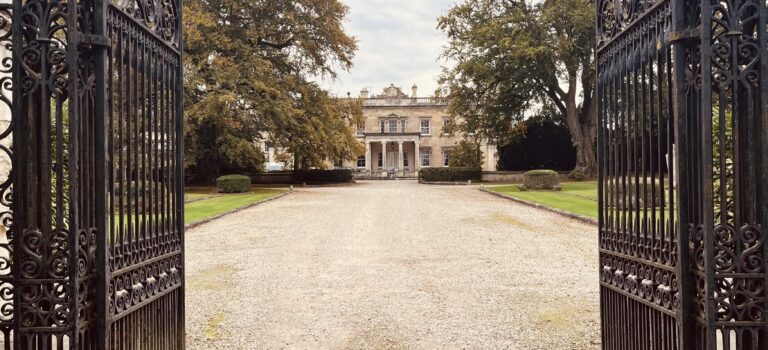
As our Uber approached the stately manor house at Grimston Park, a historic North Yorkshire estate about 25 minutes west of York, the size of the property immediately struck us. The sprawling 2,500-acre estate was a far cry from our quaint 200-acre family farm in Ekfrid Township near Melbourne, Ont.
But surprisingly, we felt right at home.
Along with my parents, Debbie and Alexander, we had travelled to this far-flung county to visit this rather impressive place because our ancestor James Alexander (1824-1895), my three-times great-grandfather, once lived, worked and worshipped here. (Though he likely arrived here via Scotland by horsedrawn coach, not electric car.)
Dec 6, 2025. The Archives, Glencoe – Donation and provenance provided by Kathleen Scott, great grand daughter, St. Thomas, Ontario. Received by Mary Simpson and Norm McGill.
This collection of items belonged to the McAlpine and Smith families of 3528 Oil Field Road, near Glencoe, Ontario. At the center of the family story is the marriage of Rebecca Smith and Alexander McAlpine, who were married on April 12, 1899. Their illustrated marriage certificate, preserved inside Alexander’s family Bible, is one of the key artifacts in this collection.
Rebecca and Alexander lived on the family farm on Oil Field Road. After Alexander’s death, the property was eventually purchased by Jim Schieman, and the McAlpine family maintained a warm friendship with the Schieman family for many years afterward. Several items in the collection reflect this long community connection.
Also included are photographs and records connected with the Zavitz, Schieman, and Peters families, who were neighbours and later stewards of the original McAlpine farm. A wedding photo of Peter Schieman’s son is part of this grouping.
Rebecca and Alexander lived on the family farm on Oil Field Road. After Alexander’s death, the property was eventually purchased by Jim Schieman, and the McAlpine family maintained a warm friendship with the Schieman family for many years afterward. Several items in the collection reflect this long community connection.
These artifacts—Bibles, hymnals, books, and photographs—together illuminate more than a century of rural family life in Southwest Middlesex, documenting marriages, migration, faith, work, and community connections passed down through generations. Thank you Heather for entrusting these treasures to the Glencoe & District Historical Society.
Tracing a Journey of Faith: Author Maria Moore shares the migration history of Old Colony Mennonites and her own family’s story during a presentation hosted by the Glencoe Historical Society.
The Old Colony Mennonite story stretches across continents and centuries—a journey shaped by faith, identity, and the ongoing search for a place where religious convictions can be lived without interference. This history, and its enduring impact, was the focus of a recent presentation by author Maria Moore at the Glencoe Presbyterian Church, hosted by the Glencoe & District Historical Society.
Over 60 history buffs gathered, in person and online, to listen to Doug Ferguson as he described his “Ancestral Odyssey” at the Glencoe and District Historical Society Archives on Wednesday evening, January 17, 2024. His Ferguson ancestors had left Craignish, Argyleshire for Aldborough Twp. in 1818 and then moved to northern Mosa Twp. in 1827. The McDonalds left Inverness for Quebec in 1830, before settling in Ekfrid Twp. in 1835.
On December 5, 2024, the Mary Webb Centre in Highgate organized an Afternoon With Authors book sale as a fundraiser to restore the beautiful stained glass dome.
The Mary Webb Centre came to life in 2010 when a group of people in the Highgate area saw an opportunity where the wrecking ball threatened to demolish the 100 year old United Church. The vision was to create community centre, art gallery and concert hall and now in 2024, 14 years later, the 250 seat venue is a “must-play” address for renowned as well as up-and-coming musicians from across Canada and for local performers too.
Reverend Enos Montour (1898-1985) was a United Church minister and writer from Six Nations of the Grand River Territory.
Over the course of his retirement, Rev. Montour wrote a collection of stories about Mount Elgin Industrial School at the time he attended (ca.1910-1915). Mount Elgin is one the earliest United Church-run Indian Residential Schools and was located on the Chippewas of the Thames First Nation. With the help of Dr. Elizabeth Graham, Montour finished and titled his book Brown Tom’s Schooldays.
With no publisher in sight, photocopies were made and distributed to family members in the early 1980s. This important book is difficult to find today, so Professor McCallum, worked with the University of Manitoba Press, Dr. Graham, and Montour’s two granddaughters Mary I. Anderson and Margaret Mackenzie, to issue a new edition.
Ellwyne Ballantyne’s twenty-two years of brief, bright life are summed up on a simple plaque attached to a majestic buttonwood tree in Carruthers Corners. When local author CJ Frederick first saw the memorial tree in the rural area just outside of Glencoe, ON, she experienced a keen reverence. “It’s just a dot on a map. I was not prepared for how beautiful the tree was. It looked like it was wearing a cloak; as my mother says, ‘wrapped in a queen’s robe’. Knowing that this tree was dedicated to the life of someone who had given that life in a faraway, long-ago conflict really made me stop and think about remembrance and the enduring nature of love.” Ballantyne’s story had to be told; Frederick was eager to record it.
Great evening with James Carruthers, the story keeper; CJ Frederick, the story teller and author; and Patrick, the story champion. We packed the Archives and hosted a few people via zoom as well.
Stories ripple all around us, if only we’re willing to hear them. In 2012, CJ first learned of Ellwyne Ballantyne and the astonishing relationship he forged with two strangers after reading a short newspaper article about the dedication of an unusual tree to a long-dead soldier from World War One. With obligations to work and family filling her time, she wasn’t yet ready to hear his story. It took a global pandemic, with the prospect of lockdowns and unexpected forced time at home, to open her ears, mind, and heart and be ready to explore the roots of Ellwyne’s story that took place more than a century before.
Yoshio Shimuzu: “You have to remember that we had been driven from our homes by racial prejudice in British Columbia, reviled and despised by the bulk of the population, and here in the farmlands of southwestern Ontario, we were welcomed as equals and saviours by the farming population.” Read more →
Presented to the Appin Memorial Day gathering August 1, 2000 by Jim May, whose family had a long association with Appin Cemetery. Jim’s first recollection of the cemetery was a phone call in the early 1950s: “Could my Dad come with his truck to help collect up stones for the cemetery gates?” This presentation tells the history of the Appin Cemetery, Appin, Ontario, Canada
By Bob Gentleman and Kathy Evans. Review printed with kind permission from the Middlesex Banner.
In July of this year, family and friends gathered at Arrowwood Farm, a beautiful property in Riverside, just south of Melbourne, to celebrate the publishing of a book written by my uncle, Bob Gentleman. The farm that is now called Arrowwood Farm (6460 Riverside Drive) has sentimental value to our family, as it was once owned by the Gentlemans, purchased in 1870.
Bob’s book, titled “They Settled in Riverside,” is largely a family history, documenting the arrival of our ancestors in the Riverside area and describing their family branches. But Bob also captures an era now decades past as he shares stories of early Riverside neighbours and of growing up in Melbourne in the 1930s. He recalls his paper route, the school, town merchants and businesses, the railroad, and the neighbours and friends who were important in his life.
Marie Williams: An impressive crowd gathered for the “Haunts of Peter McArthur” road trip Sunday afternoon, June 16, starting out at what was the McArthur homestead on McArthur Rd. before moving onto the Eddie Cemetery on Glendon Dr. and finally back to the Archives in Glencoe. Two plaques were unveiled along the way as McArthur trivia and memories were shared. Both young and more established fans of the works of the “Sage of Ekfrid,” family members and historians enjoyed the afternoon which was organized by the Glencoe and District Historical Society. The Society is marking the 100th anniversary of the death of Peter McArthur in 2024. See photos on Facebook Post.
Marie Williams, Glencoe: The huge crowd that packed into the Glencoe and District Historical Society Archives on February 22 proved that the “Sage of Ekfrid” is as popular today as he was over 100 years ago. In addition to 30 viewing online, over 50 turned up in person.
Lorne Munro – I became interested in historical events in the 1970s. My interest grew after attending the 25th Anniversary banquet of the Glencoe & District Historical Society at the Glencoe Legion in 2003. We presently have eight family genealogy books in our home that I manage and update. Ancestry.ca has been a great help and I correspond with family members to gather information.
During my tenure as President in 2018, the Society’s collection moved from our rooms on Main Street to the old library at 178 McKellar Street, Glencoe. I have served as secretary, first vice president, president (a couple of times). I’m slowing down now, just working on Wednesday afternoons in The Archives and enjoying any other projects that come along.
Peacefully at Strathroy Middlesex General Hospital , Strathroy on Monday, March 18, 2024 William “Lorne” Munro passed away in his 91st year. Predeceased by his wife Phyllis (2023). Dear father to Janice and Tom McCallum, Susan Sinclair and Steve Schneider and Cheryl and Roy Neves. Cherished Grandpa to Matt and Becky, Kimberly and Paul, Adam and Kirissa, Andrew and Reilly, John and Stacey, Scott and Mandy, Jacob, Emily and Brandon. Great-Grandpa to Isabelle, Josephine and Elliott. Lorne will be missed by many nieces and nephews. Predeceased by his parents Neil and Florence Munro, his sister Anna and his brother Keith. Link to Photos reel
The sense of community is one of the best aspects of living in a small town. Amongst these many things that gives Appin this feeling is the community gardens. Inspired by the World War II victory gardens used to help provide produce to towns and cities in Canada, the project started early in the spring of 2023.
This history was written by Lelah Bell Lumley in 1975 about her neighbourhood S.S. No. 3 School District, Mosa Township, Middlesex County, Province of Ontario, Canada.
Glenn Stott tells about 33 years of troubles that took place in Biddulph Township and Lucan Ontario region in Upper Canada from 1847 to 1880 and ended with the murder of five members of the Donnelly family.
Wonderful event held at the Appin Park. Forty people enjoyed the new community garden, congratulating the local team who have built the raised beds, set up a watering system, and nurtured the plants. Many thanks to our elected municipal leaders for taking the time to attend.
The highlight of the evening was listening to the stories regaled by Bonnie Sitter and Shirleyan English about the farmerettes, the teenagers that harvested Ontario crops from about 1942 – 1952.
Thank you Bonnie and Shirleyann. You have documented a wonderful part of agricultural history that otherwise would have been lost.
And here’s some links to the buzz created by the release of Onion Skins and Peach Fuzz: Memories of Ontario Farmerettes. (2019). by Shirleyan English and Bonnie Sitter
Bonnie Sitter, “Farmerettes: Get Out on the Farm” in The Rural Voice. June, 2018.
Local photographer and Glencoe Native, Andrew McGill hosted a Portfolio Review of his work to the core membership of the Glencoe & District Historical Society. The review took place at The Archives on February 18th, 2023.
Andrew recently moved back to the Glencoe area after living in Toronto, and New York, for over a decade. Throughout that time he has focused his lens on the farming community which he grew up in, photographing his family farm, and local community events in the region.
Andrew shared with us his 11×14″ and 8×10″ archival pigment print portfolios as well as photo books and zines he’s produced over the years. He also showed documentation from various exhibitions including his large scale public installation of 9’x9′ square banners hung at the St. Lawrence Market in downtown Toronto. Some of which have been on display at the Glencoe Curling Arena and the Glencoe Hockey Arena.
He is interested in working with the Historical Society on future projects to document our history and community.
Andrew McGill (b. 1988, Glencoe, Canada) holds a B.F.A. from The School of Image Arts, Toronto. McGill is a multi-disciplinary artist whose work is primarily photo-based. He has sharpened his own visual style through working with his peers on high profile editorial, fashion, and art photography projects in Toronto, New York, Paris, and throughout the Eastern United States. McGill has recently moved from New York City, to his hometown of Glencoe, a farming community in the heart of Southwestern Ontario, where he has begun incorporating his artistic practice into daily life, making work inspired by the local community of lifelong friends, family, and neighbours, and the pastoral landscape from which he hails.
Andrew is an American Photography Selected Winner and a Magenta Foundation Flash-Forward Emerging Photographer. A public installation of his ongoing series titled, Two Half- Hitches Could Hold the Devil Himself, was shown as part of the 2017 Scotiabank CONTACT Photography Festival, at St. Lawrence Market in Toronto. The resulting 9ft square banners have been loaned to the village of Glencoe, have been on display at the Glencoe Curling Arena, as well as, the Southwest Middlesex Hockey Arena. His work has also been shown at Harbourfront Centre in Toronto.
Andrew is currently working on personal book and portrait projects, as well as commission and editorial work. Andrew has had his work featured in the Editorial Magazine (Montreal), Fisheye Magazine (Paris), published in photobooks by Booooooom! (Vancouver), and is a contributor to The Globe and Mail (Toronto), and Topic Magazine ( New York).