McGill Farm History & the Gunnery School

My name is Andrew McGill, I’m a young farmer and a photographer. I grew up on a farm 6 kilometres north of Glencoe, Ontario. In mid 1940 my great grandfather Fred McGill purchased a farm building which was to be moved from the site of the No. 4 Bombing and Gunnery School at Fingal Ontario. The building was dismantled and moved 45 kilometres north of Fingal to its final resting place on the McGill farm at Taits rd. Glencoe where it has sat to this day. My father and I think the building was then reassembled with a new roof sometime in 1941. The site of No. 4 B&G school sat on a swath of 724 acres of land that was returned to the crown for the purpose of building the training facility. One can imagine the numerous agricultural buildings on the land that would have had to be dismantled and moved in short order to make way for the multiple airplane hangers and triangle runway of the Fingal school. 

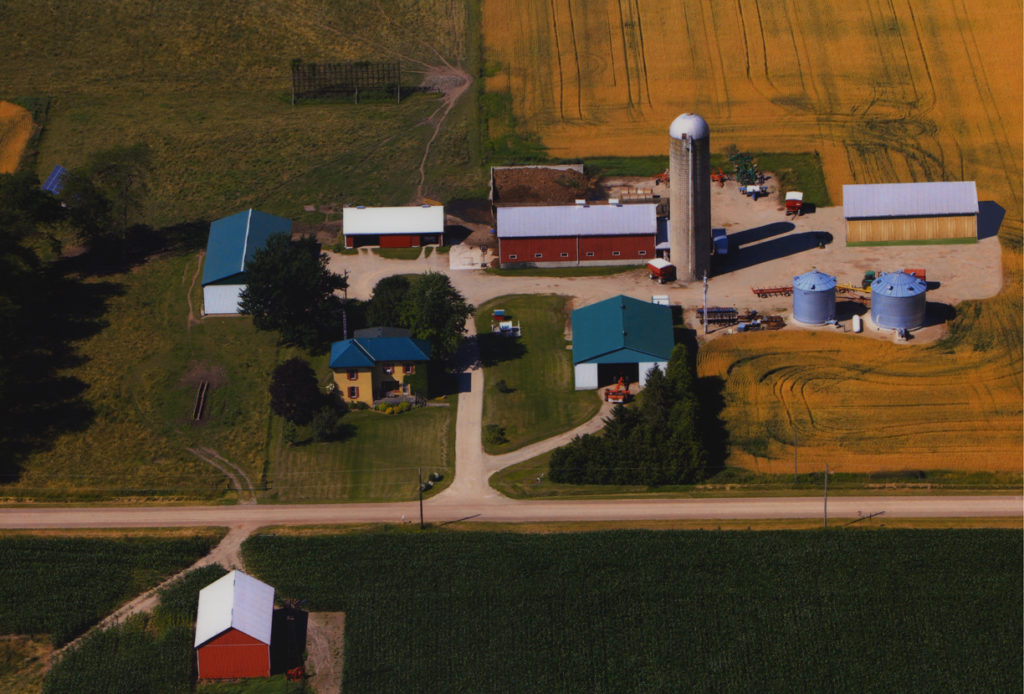
Aerial photo of the McGill farm circa 1977. The building in question can be seen directly to the left of the barn. (Photo care of McGill family Archive, 1977.)

McGill farm building moved from Fingal Bombing And Gunnery School site in 1940. (Photo: Andrew McGill. September, 2022.)
Aerial photo of the site of the Fingal Bombing and Gunnery School. (Photo: Commonwealth Air Training Plan Museum.)
Route from Fingal B&G school site to the McGill farm. (Photo: Google Maps)
Interior detail of the McGill farm building which continues to house tools and horse equipment which would have been used by the late Fred McGill circa 1940’s. (Photo: Andrew McGill, 2016.)
A restored 1942 Minneapolis Moline “Waterloo” tractor stored in the building on the McGill farms site. (Photo: Andrew McGill, 2022.)
Winifred (Eddie), Fred, and Blake McGill using their 1942 Minneapolis Moline Tractor to plant sugar beets for seed to aid the allied forces war effort. (Photo care of McGill family Archive, 1942.)
Alternate angle of Winifred (Eddie), Fred, and Blake McGill using their 1942 Minneapolis Moline Tractor to plant sugar beets for seed to aid the allied forces war effort. (Photo care of McGill family Archive, 1942.)
Clare McGill and Dorothy Brown in front of the McGill homestead with the 1942 Minneapolis Moline “Waterloo” tractor. (Photo care of McGill family Archive, 1942.)
Clare, Winifred (Eddie), and Blake McGill in front of the McGill homestead to mark the moment King George VI announced enlistment of eligible men into the military in Canada. (Photo care of McGill family Archive, 1941.)


Blake McGill standing with his newly restored 1942 Minneapolis Moline tractor on the McGill farm in 1993. (Photo care of McGill family Archive, 1993.)
McGill Farm
Aerial photo of the McGill farm taken the year of its 100th anniversary in 2016. The relocated building can be seen clearly to the left of the barn. (Photo care of McGill family Archive, 2016.)
Dorothy (Knapp), Doug, and Ron McRae in Ilderton Ontario, 1955
Dorothy (Knapp), Doug, and Ron McRae in Ilderton Ontario, 1955. During WWII, as a 13 year old, my grandmother Dorothy along with her schoolmates were tasked with finding a plant called Alder Buckthorn, which because of its consistent burn time was used to create fuses for depth charges used to sink German navy vessels. It is told that Dorothy found enough of the valuable plant for her father to pay off the mortgage of their farm. (Photo care of the McRae family Archive, 1955.)

The #4 Bombing and Gunnery School

Three perspectives on the local  #4 Bombing and Gunnery School during WWII were presented at the Archives, 178 McKellar St, Glencoe October 12, 2022 from 7 p.m. to 9 p.m.  

Blair Ferguson, local author of Southwold Remembers: The #4 Bombing and Gunnery School brought some great artifacts. Blair is an authority on the local training facility which is located at the Fingal Wildlife Management Area. His book is filled with stories about the people who worked there.

Andrew McGill is a local photographer and farmer. Andrew presented his family’s personal connection to the Gunnery School.   

Paul Anderson, author of Eric Stirling – The Missing Son – A Recollection of His Life, (published privately) joined us from his home in New Zealand via Zoom. Young Eric Stirling joined the airforce and like so many young guys from the Commonwealth, he was trained in Canada at the #4 B&G School. He never made it home.

The young men were SO young. The movies cast actors in their 30s so we forget that WWII was the first adventure off the farm for many young soldiers. Eric was 24. Many were not even 18.

No Guns, Just God’s Glory: Tom Wilson. Nov 8

Local guests: Arrive at the Archives at 1:45 p.m. so we can join our on-line guests  at 2:00 p.m.  Author Tom Wilson joins us from the French Riviera. The Archives is located at  178 McKellar St, Glencoe, ON N0L 1M0.  

No Guns, Just God’s Glory is a book about the Chaplains who fought the good fight during WWII.  Details about the role of Allied military chaplains and stories of those who died in the Battle of Normandy from June 6, 1944 to August 25, 1944.   

On-line guests:    Join Zoom Meeting before 2:00 p.m. 

https://us06web.zoom.us/j/84100493163?pwd=bThlYnp4NXVEOGk4bTB4Vno5Nmo0dz09


Meeting ID: 841 0049 3163

Passcode: 512908.     More numbers below.

Rev. Tom Wilson is a local son, who for 12 years owned and managed the Why Not Shop in Glencoe and lived on a farm near Melbourne.  He is a Canadian Anglican Priest who has served in Southern Ontario, Scotland and now the French Riviera. Tom holds 3 degrees, a BA and Mdiv from Western and a doctorate from Drew University in New Jersey. He and his wife have 3 small dogs, a Bichon and 2 chihuahuas.  Welcome home Tom.  Looking forward to your presentation direct from the French Riviera.  

Order his book, No Guns, Just God’s Glory at: 

https://www.orepeditions.com/fr/histoire/566-no-guns-just-god-s-glory-9782815104166.html  

Tom: “I look back with fondness on my time in Glencoe and SW Ontario. I confess though, I do like the winter here on the French Riviera, as it is normally sunny and warm during the days, but the nights are cool.”


Dial by your location

        +1 309 205 3325 US

        +1 312 626 6799 US (Chicago)

        +1 346 248 7799 US (Houston)

        +1 360 209 5623 US

        +1 386 347 5053 US

        +1 564 217 2000 US

        +1 646 558 8656 US (New York)

        +1 646 931 3860 US

        +1 669 444 9171 US

        +1 719 359 4580 US

        +1 720 707 2699 US (Denver)

        +1 253 215 8782 US (Tacoma)

        +1 301 715 8592 US (Washington DC)


One tap mobile

+13092053325,,84100493163#,,,,*512908# US

+13126266799,,84100493163#,,,,*512908# US (Chicago)


Meeting ID: 841 0049 3163

Passcode: 512908

Oakland Cemetery Memorial

Oakland Cemetery Memorial

“Beyond the gates of the cemetery lives an historical account of our past, a rich heritage populated by friends and relatives.  Loved ones who can no longer be with us, but whose memories live on.”  – Josh Kekosz.  


Each year the historical society honours those who came before us.  On July 24, 2022, the   Cemetery Memorial Service was held at Oakland Cemetery, which was opened May 1894 by a group of ten men who formed a Board of Directors.  


Five acres was purchased from a local farmer in Mosa Township and surveyed into plots of 16 feet X 16 feet.  These plots were purchased by families.  One plot had room for 8 burials.  The first burial was Thomas Hopkins in May 1894.     


The community was previously served by small family plots and St. Andrew’s (Graham) Cemetery at 112 Main Street Glencoe (Concession 1, Lot 1). St. Andrew’s eventually contained approximately 500 burials between 1841 – 1931.  It still exists and is classified as ‘abandonned’.  


After the new Oakland Cemetery opened and families started purchasing plots, new stones were installed and the names of beloved previously deceased family members were commemorated.  This could explain why there are 175 inscriptions whose dates of death  are prior to May 1894.


Records are poor but we surmise that sometimes stones were moved to the new Oakland.  Sometimes the stones might have been buried or lost from their original  family plot locations.  And what of the bodies?  We guess that bodies probably remain in their original resting places.  It seems doubtful if they would have  been disinterred and moved 

Link to interactive G&DHS Cemetery Map.   


G&DHS ‘Meet & Greet’ on Zoom Jan 11 at 7 p.m. EST

Our 2022 Zoom   –   Meet & Greet


Tuesday, January 11th 7 p.m.


We want to say hello and to let you know that we’re still here.  Now that all these online meeting tools are available, we think it’s time to try them out.  


We urge all our local history enthusiasts and friends to join us.  The Directors are going to tell us what they’ve been working on during the pandemic and we want to hear about your work too.  


Zoom Instructions: 

Jan 11, 2022 07:00 PM Eastern Time (US and Canada)

Join Zoom Meeting at 6:55 p.m. 

https://zoom.us/j/98464986531

Meeting ID: 984 6498 6531

Canadian Farmer – Eric Simpson

Eric Simpson is an egg farmer on Longwoods Road who farms with his brother, Owen, his mother Vicky , wife Sarah, two boys and a couple of staff. Eric was interested in following the YouTube channels of other farmers and decided his family farm had a story to tell too.
Simpson Poultry Farms makes their own feed, so Eric’s egg farm story starts with the corn and soybeans he grows to feed his chickens. Enjoy the day with Eric.
Check out his channel
Here is baby chick day:
Melbourne Legion 70 years

Melbourne Legion 70 years

Written by JoAnn Galbraith

On November 18th, 1949, twenty-four area veterans met in the Community Hall in Melbourne with the idea of possibly forming a Legion in the village.  With backing from Glencoe Legion Branch # 219, Melbourne received its Charter February 1st 1950. In 2017, a history committee was formed  to make plans for the anniversary celebration.

Several displays of the Legion’s history have been shown to the public since the committee was formed.   Richard Hathaway scanned all the photos and memorabilia while JoAnn Galbraith has reviewed the records and minute books with a possibility of publishing a book with the Legion’s history  in 2020.   

Fifty Legion members and special guest attended a  complimentary dinner at the Legion on Saturday night November 30th. Folks viewed a slide presentation of photos from the 1950s to present day.  Also on display were original photos and documents.  

At each table setting was a place card with the front cover consisting of a photo of the first Legion building 1949 and the present one in 2019.

Zone A 5 Commander Gerry Cross gave a brief history of Branch #510. Bob Davenport, on behalf of Reg Lovell Glencoe Branch # 219, gave a brief history of the affiliation between Melbourne Legion and Glencoe Legion since Branch #510’s formation.  

Regrets were received from Peg Luce, Zone A 5 Deputy Commander, and former Federal Minister Bev Shipley.  

JoAnn Galbraith, a member of the executive and the history committee, was introduced by President Tom Jeffery.  

Pin History

JoAnn told the history of her collection of Legion pins from 1783 to 2019.  The United Empire Loyalist pin represents those who were treated as traitors because of their allegiance to the British throne following the American Revolution were evacuated to Canada in 1783. 

The 1812 to 1815 pin represents the war 1812-15. A large percentage of those that took up arms in the 1812 War were Loyalists who fought against the American forces who were trying to take over their new homeland.  The 1812 pin also represents the Battle of Longwoods.   A memorial service is held annually at the site where the Battle occurred March 4,1814, usually the Sunday prior to March 4th. 

The American flag pin represents the Civil War. The Vimy Pin marks the birth of Canada as a nation as of the April 8th battle 1917,  a WWI pin dated 1918.  A Poppy pin and the origin of its existence since 1918.  A World War II pin, a Melbourne Legion Branch pin. 

JoAnn gave a brief history of the Melbourne Legion and the Ladies Auxiliary. A First Nation’s pin representing the Native Veterans. A Canadian flag pin represented Vietnam, Korean and Afghan Veterans.  A “D” Day  Looney 2019 pin and a Poppy Wreath pin inscribed with “We Will Remember Them”.  

Even though JoAnn is only an affiliate member of Melbourne Legion Branch #510,  her family members have been very involved during war time.  JoAnn’s great-great grandfather, Thomas Lucas was a Lieutenant in the 1812-15 war,  a son of a loyalist, who is buried in Cade Cemetery in Strathroy Caradoc. Her cousin Alonzo Lucas gave the Supreme Sacrifice in World War I. His parents are buried in Cook Cemetery. Her second cousin, Private Warden Lucas, a WWI Veteran, was a member of Melbourne Legion Branch #510. Her Uncle Bud Lucas, Royal Canadian Navy World War II, was a member of Caradoc-Mount Brydges Legion #251.  

In the new Mount Brydges subdivision in Municipality of Strathroy-Caradoc called Edgewoods, a number of the streets are named after Veterans of Caradoc Township and the Municipality of Strathroy-Caradoc. Lucas Avenue is a tribute to the four Lucas Veterans  who at one time or another were residents of Caradoc Township.  Two of the four are buried in the Municipality of Strathroy-Caradoc.

On the back of the place card was a list of  Melbourne veterans who gave the Supreme Sacrifice in World War I & II.   
Glencoe has changed over the decades.

Rural challenges

by Marie Williams-Gagnon, Hayter Publications Inc., Sept 2019

Spending a few hours involved in a municipal economic development strategy session this past week proved both enlightening and frightening, as would be the case in any rural community across Canada.

It’s no secret that rural communities face their own advantages, along with their own unique challenges. The reasons rural communities both suffer and thrive  have changed over the years, as have their demographics. 

In 1851, nearly nine in 10 Canadians lived in rural areas. The early census’ of this nation contained questions about the number of acres of land attached to a dwelling, the number and type of animals owned as well as the horsepower of equipment used on the property. During that time period, the Canadian economy was based on the primary sector more than today, led by agriculture and natural resources like wood or coal.

The proportion of those living in rural areas has steadily declined, eventually falling below 50 per cent between 1921 and 1931, due mainly to shifts within the Canadian economy.

Between 2006 and 2011, Canada’s rural population did increase by 1.1 per cent, compared to the nation’s overall growth rate of 5.9 per cent. However, in the same period, the rural proportion of the population declined. Ontario is one of four provinces that have the proportion of their population living in rural regions near to or lower than the national average. In fact, Ontario sits second lowest at 14.1 per cent. In a nutshell, today fewer than one in five live in a rural area.

The 2019 demographics indicate that rural communities overall are still facing a declining population, although many from cities are heading out of the urban centres for more reasonable housing prices. While the shift in search of housing is welcome news, it also comes with its own challenges as urbanites learn to cope without round-the-clock store openings, the anonymity of city living, internet options and, at times, even the scents of rural life.

Some opt to simply use their rural homes as residences, putting any involvement within their new communities on the back burner. They have continued to shop, dine and seek entertainment in the cities, places  that they commute to everyday for work, instead of seeing what their local communities have to offer. 

As many who live in rural areas are aware, there is a lot to offer and many opportunities beyond the farm life although agriculture may have the main economic impact, often followed by motor vehicle parts manufacturing and construction. 

While rural Ontario is not attracting the major immigrant population that cities are, it is changing in other ways. No longer are children automatically expected to take over the family farms. As a result, some have opted to sell to neighbours who have often severed the rural homes off and amalgamated the land to create larger farm parcels. 

Businesses, which no longer need a storefront thanks to the internet, are growing in rural areas but empty storefronts create unease among potential residents. The challenges small rural businesses face are multiple, ranging from attracting customers who are apt to drive to the city for perceived deals to simply getting the financing to even open their doors. Community businesses, which can be ignored by both newcomers and long-time residents, inevitably remain a target for fundraisers of all types which ultimately cuts into profits.

Rural municipal governments face their own challenges with the need to attract and retain both residents and businesses, to find funding for downloaded services while handling both application bottlenecks and increased regulations for everything from wastewater treatment to building permits. These communities face hurdles attracting and retaining health care professionals and keeping the doors of schools, arenas and churches open. 

On the horizon are even more challenges as baby boomers become retired seniors, needing support and housing. Without suitable housing to accommodate an aging population, rural communities may lose even more residents. That is something that census figures are already demonstrating with the number of seniors living in rural Canada being lower (15 per cent) than those living in small and medium centres. Rural Canada is also unique with a small proportion of young adults aged 15 to 29. In 2011, 17 per cent of people living in rural areas were aged 15 to 29, a proportion lower than the national average of 20. Many leave their rural homes in search of higher education and employment, never to return.

There are no magic answers. What must happen closest to home is getting involved in rural communities, buying local and supporting the businesses that in turn support local events and teams. The success or failure of the local economy hinges on the support of the community.

“A successful economic development strategy must focus on improving the skills of the area’s workforce, reducing the cost of doing business and making available the resources business needs to compete and thrive in today’s global economy.” –Rod Blagojevich

-30-

Marie Williams-Gagnon, Hayter Publications

The Fenians are coming!

The 1866 Fenian Raids under Captain Anthony O’Malley.

Ken Willis will talk about the Wardsville Volunteer Infantry Company. The Company was actively protecting southwestern Ontario along the Saint Clair River in Sarnia area from March – June 1866 for fear of an invasion of the Fenians.

Everyone welcome! 7:00 p.m. at The Archives, 178 McKellar Street. Glencoe.

Glencoe historians pay homage to Gough Cemetery

by Marie Williams-Gagnon, Hayter Publications Inc.  
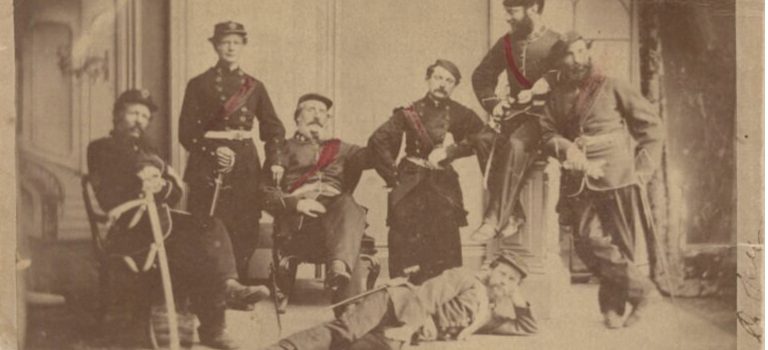
Seated in the shade of an old pine tree, a group of over 40 gathered to honour those interred at the Gough Cemetery on Sunday afternoon, July 28, 2019. The community memorial service, an annual event held at a different cemetery each year, was hosted by the Glencoe & District Historical Society.

The Gough Cemetery is located at 5018 Scotchmere Dr. in Adelaide-Metcalfe.After Society president Ken Beecroft welcomed guests and area historian Ken Willis offered a dedication and prayer, historian Harold Carruthers provided some background on the Cemetery itself which is on the property settled by the John and Eliza  (Kellestine) MacGoughr (later Gough) family in 1845.

The couple had a large family of 13 but their son Nelson died in 1849. His was likely to be the first burial at the site, followed by those of his sisters Hannah in 1855 and Elizabeth in 1865. Since that time, the predominant family names of those interred on the tiny property are Ash, Boyd, Gough, Hetherington, Moore, Olde, Towers, Williams and Yager. Society member Marilyn (Gough) McCallum provided a detailed history of the “MacGoughr” family that voyaged to Canada from Ireland in 1831.

The family was among the earliest settlers of township in the early 1830s with Metcalfe itself not existing prior to 1846 when Ekfrid and Adelaide were divided. “They endured all the hardships of pioneer life having cut out of the wilderness homes for themselves on land given to them by the Crown.” McCallum detailed the life of settlers John and Eliza MacGoughr who received title on the property.

Sometime in the 1850s, the “Mac” and the “r” were dropped from their name. She shared details about family members, including those buried at that particular cemetery. She recalled visiting the cemetery as a child. “We would tread softly, touch the stones, speak the names…of those who came before.”

Lorne Munro added some information about the Kellestine family before the service closed. The property was sold to Charles Towers in 1909. The Cemetery is personally maintained by Heather and Charlie Towers who were recognized for their efforts and the new fence they constructed at the front of the property. They took over the responsibility from Reta and Alex Johnson and Vern and Shirley Towers who had maintained it over the years. 

Staying out of the heat while gathered in the shade, Glencoe historians and family members joined together at the Gough Cemetery in Adelaide-Metcalfe for a service of remembrance. The Glencoe and District Historical Society holds services at a different community cemetery each year. Photo by Marie Williams-Gagnon, Hayter Publications


Gough Cemetery

July 28, 2019.  Community Memorial Service.  Gough Cemetery, 5018 Scotchmere Drive, Glencoe, Metcalfe Township, ON.  2:00 p.m. Bring a lawn chair. No rain date.   In case of rain, the event will relocate to The Archives, 178 McKellar Street, Glencoe, ON.

Black History

February 20, 2019. “I Continue the Journey”.

Stan Grizzle and his father both have devoted their lives to fighting racism.

Join us for this important event during Black History month. 2:00 pm. 178 McKellar Street, Glencoe.  

70th Anniversary of the Melbourne Legion Branch #510

70th Anniversary of the Melbourne Legion Branch #510

Written by JoAnn Galbraith.

Melbourne, ON: On Wednesday evening October 17th, the Glencoe & District Historical Society celebrated the 70th Anniversary of the Melbourne Legion Branch #510 at their building in Melbourne. President Lorne Munro welcomed those attending and introduced the guest speaker, JoAnn Galbraith.

JoAnn announced that this year (2018), the Melbourne Legion Executive decided to update Legion records and compile photos and dialogues that Veterans and their family members have accumulated over the years. Tom Jeffrey, Wendy Robertson, Red Noble, Richard Hathaway and JoAnn Galbraith were chosen to carry out this important archival work.  For the evening.

JoAnn prepared a large display of Legion photographs and research material. She then explained the history of the first Legions which were established in 1925 after WWI.  These were special places where veterans could gather to reminisce and support one another.   Read more

McKellar Family Celebrates 180 Years


This story printed with permission from Marie Williams-Gagnon.

The descendants of Archibald and Nancy McKellar gathered together, Saturday, August 25, 2018 to celebrate the milestone anniversary of their arrival and settlement in Metcalfe Township. The reunion was held at A.W. Campbell Conservation Area at Alvinston. Although it was a rainy and inhospitable day, about 100 interested family attendees enjoyed food, games, contests, stories and photos, and exchanged genealogy information.

The McKellars, both natives of the parish of Kilmicheal-Glassary, Argyll, Scotland, migrated to Canada in 1831 and eventually made their way to Metcalfe Township in west Middlesex County. This was certainly a time of hardship and toil for the early pioneer family.

The original homestead farm located at Lot 24, Concession 6, was purchased and carved from the forest in 1838 and has been continuously in the family since then, handed down, inherited and purchased by direct descendants. The current owners are sixth generation, Hugh McKellar and his wife Andrea Boyd.