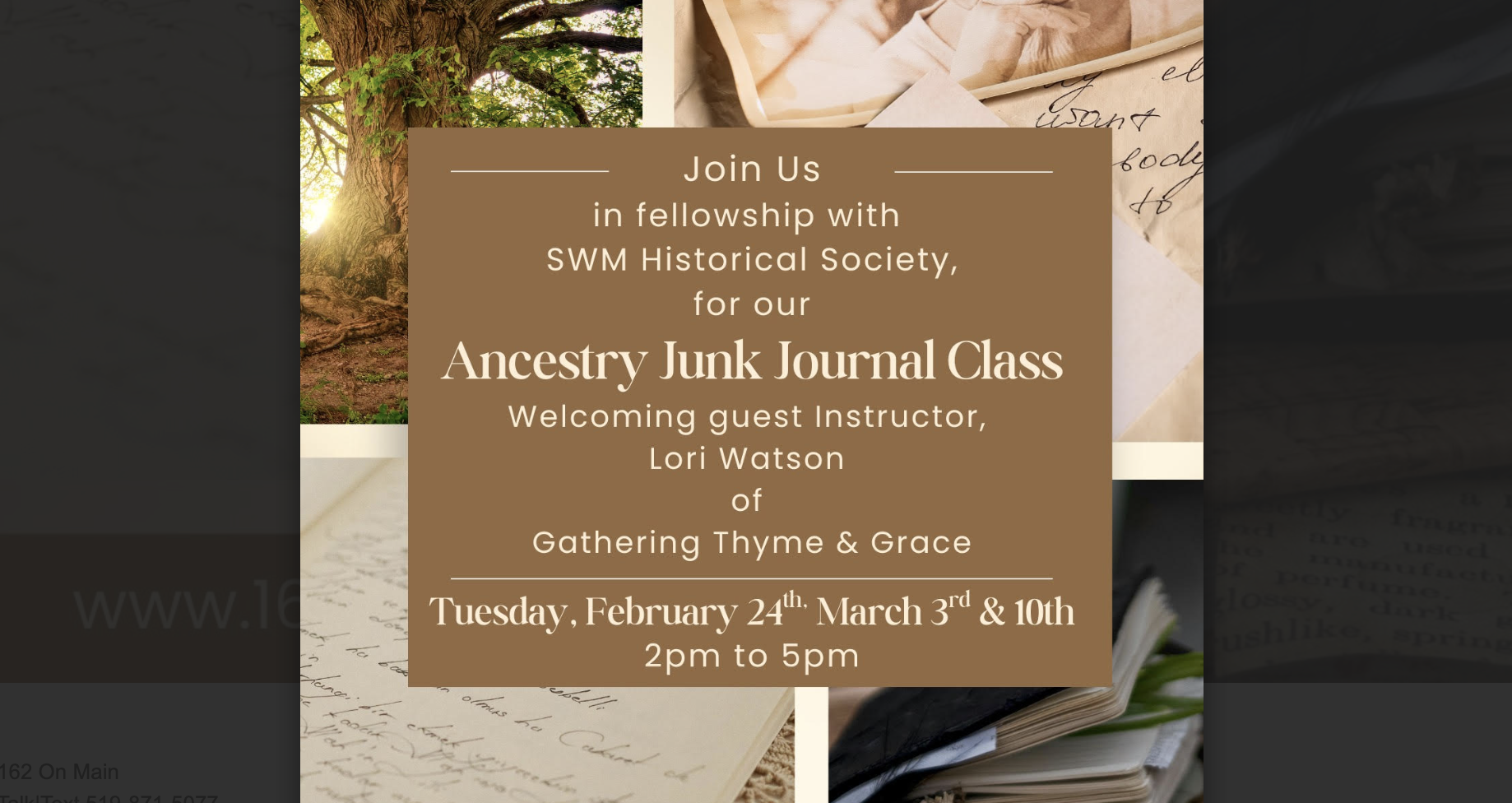
Feb 24, March 3 & 10, 2026: Ancestry Junk Journaling Workshop series
162 on Main 162 Main Street, Glencoe, OntarioJoin us for three afternoons with guest instructor Lori Watson of Gathering Thyme & Grace for a hands-on Junk Journaling Workshop. Register now – Small class of 4.
Tuesday, February 24, March 3 & 10, 2026 | 2:00 – 5:00 p.m.
Here is the link to sign up; $75 per person.
https://www.162onmain.ca/product/ancestry-junk-journal-workshop/Q5GNON3OAA66RB446GHCCIP4